








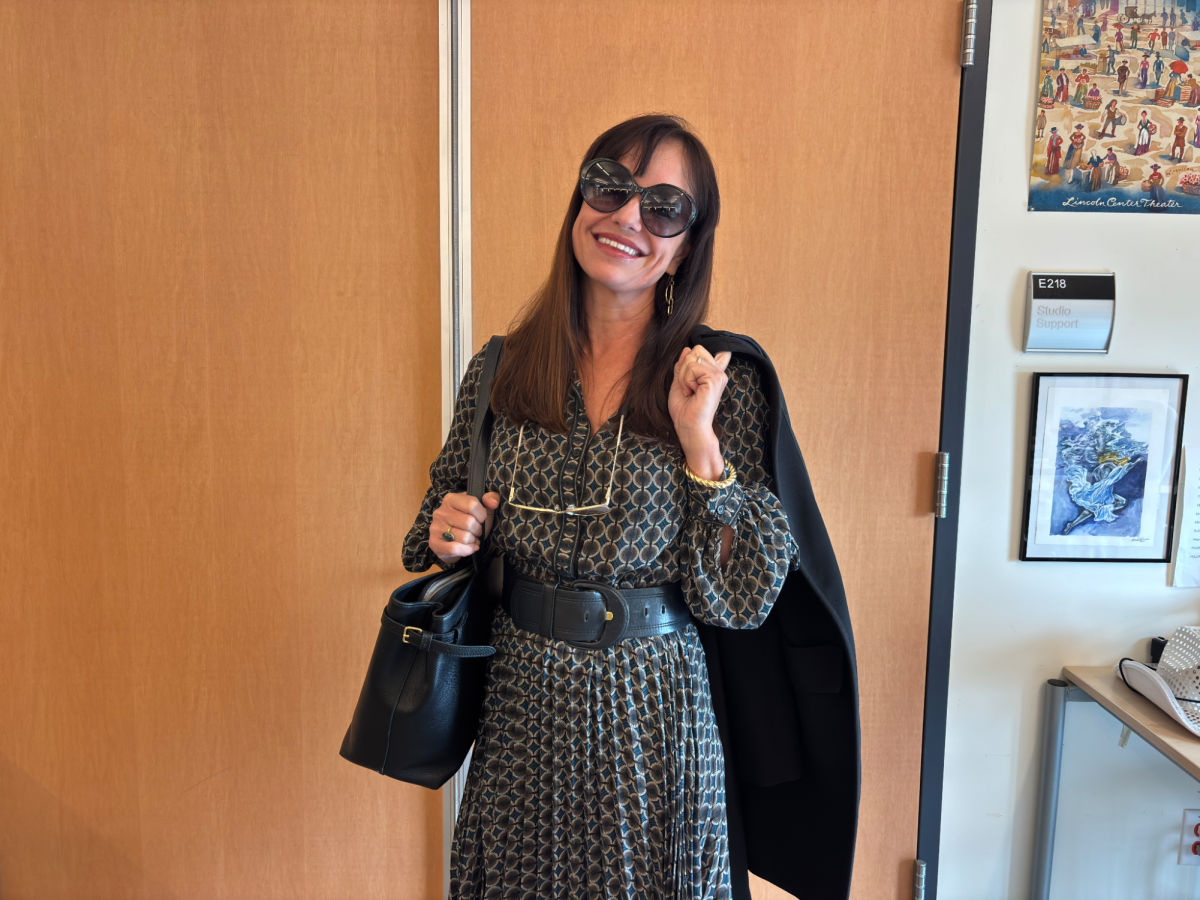







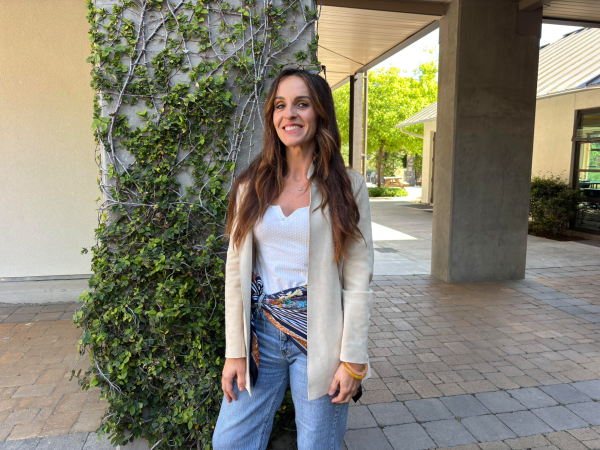
Spanish teacher Maitane Elorza has a Boho-chic style. Elorza went to high school in Spain in the ‘90s. She reflected, “I went through different phases. My freshman and sophomore years, I was more preppy, but then I transitioned into more of a grunge look. My junior and senior years were all about jeans and big t-shirts with a flannel and that careless kind of look. Nobody wore makeup; it was just very, very relaxed, comfortable and kind of oversized.”
Elorza actively participated in the trends of her time, but as her style evolved, Elorza chose to follow fewer trends and focused on wearing clothing she found “comfortable, that fit nicely and looked good.”
Growing up in Spain, Elorza noticed that, “when you walk everywhere, people dress better.” She thinks this is why “culturally, at least in the area of Spain where I grew up in the Basque Country, people dress nicely.” Elorza described fashion as “valued” and “embedded” in Spanish culture. She said, “I don’t really have any celebrities that I follow because their lifestyle is not mine, you know? I think people in the streets are more influential to me.”
Elorza moved to Florida when she was 29. There, she felt that “in terms of fashion and style, I was completely lost.” Her definition of what looked professional did not align with the Floridian style. To understand what is normal to wear in America, she “had to observe and see what is appropriate or not and relearn that a little bit.”
Coming to California, it was a culture shock for her to learn that “wearing jeans to work is not something you should do. In Spain, you can see jeans on a congresswoman.” In Spain, wearing jeans is considered business attire.
Elorza’s well-polished and brightly colored style is a result of her upbringing in Spain, many years of discovering what she looks best in, and a personal love for fashion. From her tasteful accessories to cohesive choice of colors, she always shows up looking amazing!
Theater Teacher and Director Jennifer Coté joked that, “I hate that I’m a cliché…Some days I end up putting my hair in a bun and then putting a paintbrush in it without even realizing it because I just grabbed the closest thing next to me. And then I realized, oh, that looks like a costume because I’m an art teacher with a paintbrush in my hair.”
Coté loves to wear eclectic and timeless clothing. She prefers a neutral, black and white color palette. She said, “I just love black and white. I used to wear color all the time, but now, every time I go shopping, I grab piles and piles of clothes and they’re always black and white. And then sometimes burgundy, if I’m feeling really brave.”
Coté takes a lot of inspiration from Diane Keaton. “Whenever I’m getting dressed, I think: What would Diane Keaton wear? It’s always black and white. I love her hats. I love her super bold statements like a big, thick, chunky belt or a really wide leg pant with a huge platform. She’s iconic.”
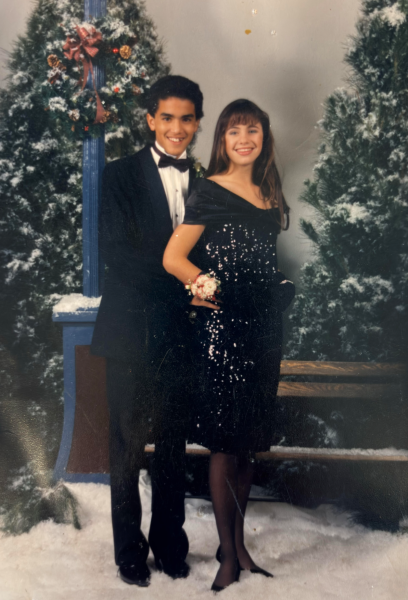
Coté said that when she was in high school, she preferred to stand out rather than blend in. “My style in high school was a little bit alternative. I just didn’t want to wear what all the other people were wearing. So I did a lot of thrifting, and I did a lot of vintage. Like my winter formal dress and my prom dresses were always 1940s, 1950s vintage formals. I found a Givenchy black formal, full-length dress as my prom dress.” She continued, “I would wear stuff I would think is cute now, which is really funny. Like, I’d wear cut off jean shorts with really crazy wild floral pattern tights and Doc Martin boots and a vintage dress.”
When reflecting on how her style has evolved, Coté said, “I think I’ve definitely gotten a lot more sleek and sophisticated, but I still love vintage.” Coté values a less bright and flashy wardrobe because, “I think my brain is a little bit chaotic. So if I can go into my closet and see things in terms of cleaner lines and more basic color palettes, it just feels more calming on my brain now that so much of my job is creating big, vivid, bright, beautiful stage pictures.”

Humanities III teacher Drew Gloger’s style does not fit into just one box. He could wear anything from a formal dinner outfit to “lazy Sunday” attire for a doughnut run. Gloger enjoys wearing and layering cotton clothing. He prioritizes practicality and comfort for work attire. Often he wears earth tones, neutrals and various shades of blue.
Gloger is not a fan of wasting money on low-quality clothing. “I don’t like fast fashion. I don’t want to spend a lot of money for something that shouldn’t cost that much money.” He offered the advice to buy your clothing on sale or off-season, “I’m a patient buyer. I’ll try to buy my winter outfits now. Because then that’s when the sales are.”
Gloger brought up the point that in high school, it’s often hard or nearly impossible to be entirely individual with your style when you’re constantly surrounded by your peers. He said, “You’re always at some level wearing what someone else is wearing, which is cool. That is actually an important part of fashion, being like, oh, yeah, whatever, I’m wearing the thing that everyone’s wearing. Cool. No big deal.”
Gloger talked about how, through the many different phases of life, his style has had to adapt.

He had a mindset shift when he got married, “There’s also something great, when you get married, where you have a partner. Your style doesn’t matter as much because you have someone that loves you. You’re just like, I can wear whatever I want.” Then, when he first became a dad, he “ went through a good, you know, 5 to 10 years of pretty atrocious style, which is important. Like, the worst thing for a child is a parent who’s super into their own style. So I’m so glad I was not. I don’t know what I wore. It was awful.”
Gloger also had a very professional attire phase, “I went through a period where I had to dress professionally. It was your adult world, like having to wear the suit and tie.” Gloger even talked about “a midlife thing where you’re like, oh, who am I or what else? How do I identify where I am in my life right now?”
While reflecting on what his favorite fashion era is, Gloger said: “There’s nostalgia for the eras you didn’t get to live through.” For him, that was the 70s and 60s. This notion is very notable when looking at Gen Z’s strong appreciation for early 2000’s fashion, as it is the era we just barely missed.
Gloger spoke on how he always loves to support students who are working in fashion or are selling things, “There was a student here named Jace, he had a side hustle where he would buy Nike sneakers and resell them. And he was really good at it. And he outfitted me with a pair of healthy sneakers. And I bought them from him. So if anyone’s working in fashion and wants some people to wear their stuff, I want to support them.” So go find Drew if you’re looking for someone to buy your product!
Each of these Sonoma Academy teachers shows up with their individual style that tells a story about who they are and where they came from. We can see how a person’s style evolves with them throughout their life, and how ultimately it’s up to you to find what makes you comfortable and wear what you love!

ava • May 11, 2026 at 4:51 pm
what a great article!