
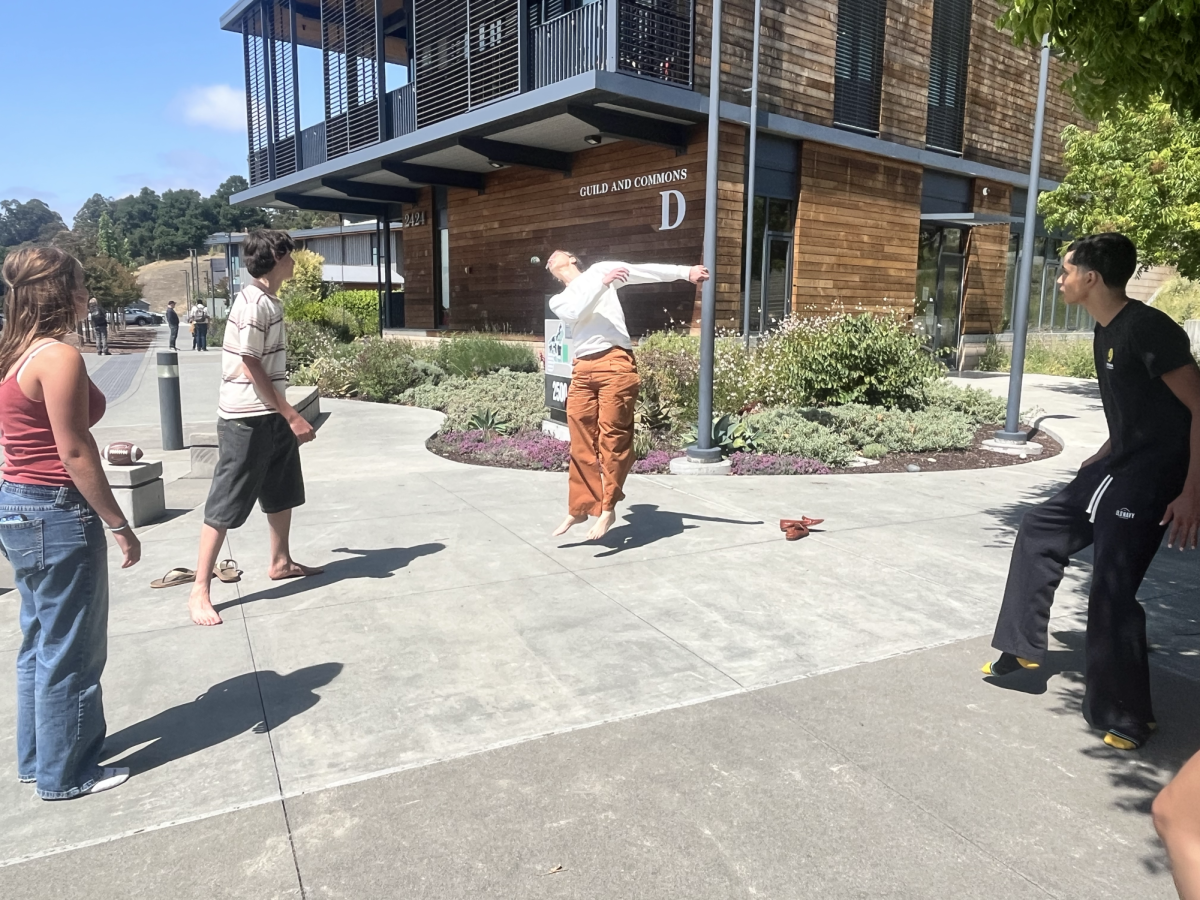












In the past month, a strange phenomenon has emerged on our campus. This fad consists of students standing in circles, kicking beanbags at each other during lunch, before school and during passing periods. These groups range from two to almost twenty students, and besides the occasional outlier like junior Costa McNulty (‘27), who’s allegedly been playing “since the womb,” most participants in the hacky sack craze deny having ever touched a bean-filled bag before the past month or so.
“I never played before this month; I didn’t even know what it was, but it’s very fun. I’ve just bought one,” said Mack Mahoney (‘27), who was described by an anonymous classmate as a “dirty sack boy.”
What could possibly cause such a bizarre, sudden and widespread trend? Could it be perhaps the planetary sack featured in the recent hit film “Project Hail Mary”? Is it simply the laidback/retro/hipster/slightly fratty aura surrounding the barefooted sackers?
To understand the nation-sweeping impact of the sack, I needed boots (or rather, bare feet) on the ground. The first step to sacking is to obtain a sack, and that is no easy feat, as Sonoma Academy administrators discovered when they attempted to place an order for school-branded sacks; the things are selling out everywhere and are back-ordered for months. Fortunately, with the crochet-craftsmanship of sophomore Abigail Greenleaf and dry garbanzo beans nabbed from the depths of the teaching kitchen, a sack was soon in my possession.
Then came step two: finding a circle. The game of hacky sack requires several people in order to be played; it is completely collaborative. “There are rules where you can’t really get mad or be toxic in the sack circle,” said Luke Boatright (‘28). A point is only scored when the sack has been touched by the entire circle; this is called a “hack.”
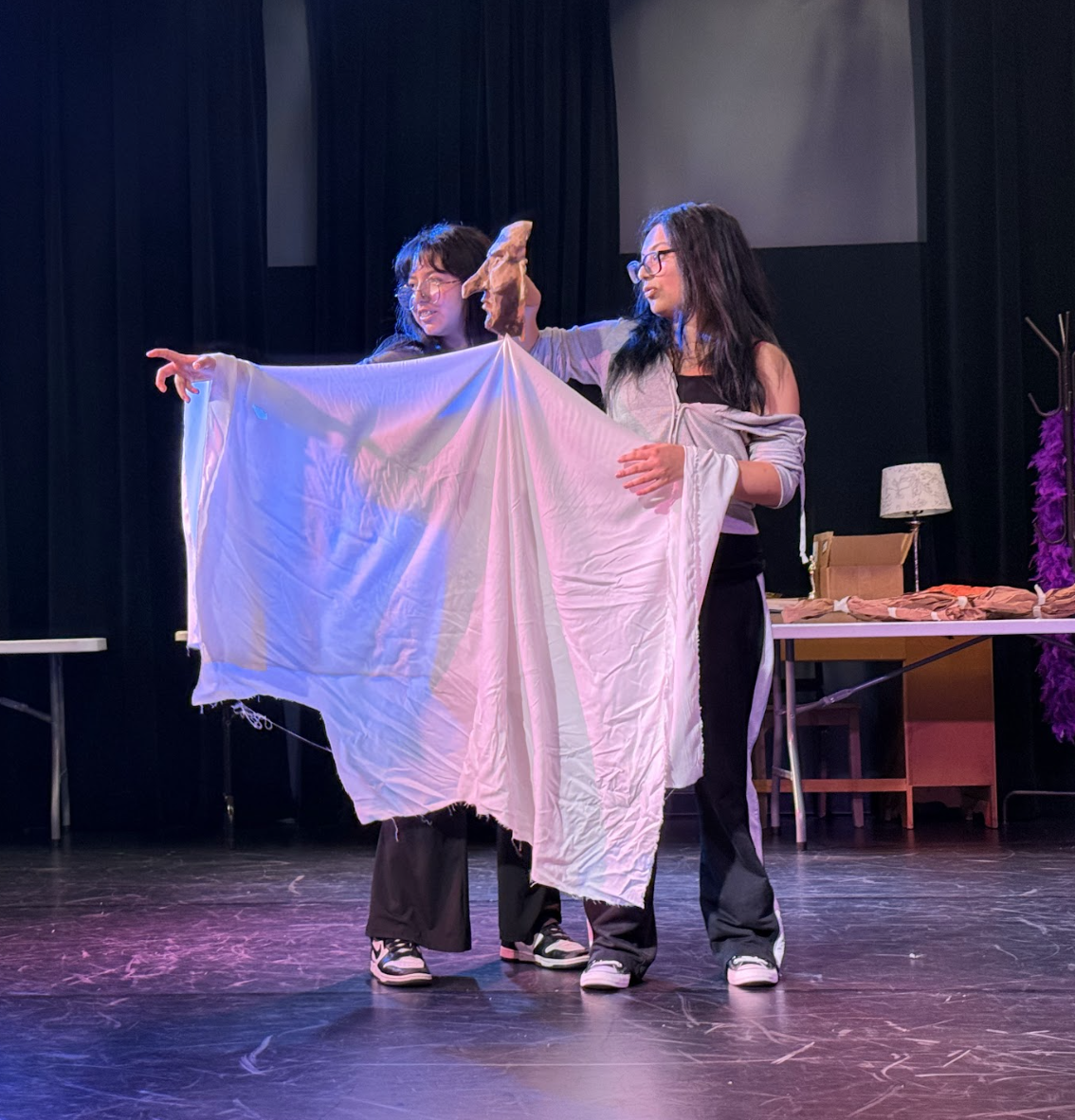
My circle consisted of a dozen “sack virgins”: the cast and crew of The Tin Woodsman of Oz. Being rookie sackers and non-athletes, we were terrible at the game, but nonetheless, we played for almost an hour, laughing the entire time despite the foot-sizzling nature of concrete in the sun. “This is how we unite the grades,” someone remarked. “Luisa, why would you jump out of the way?” said someone else, and for that entire hour, not one of our twelve or so phones made an appearance.
It was at this point that I consulted Humanities Teacher Jamie Murray, who let me in on the details of previous sack crazes. The hacky sack emerged in American culture when two men named John Stalberger and Mike Marshal “invented” it based on an ancient Native American game. The copyrighted name Hacky Sack emerged because Marshall would say, “Hey, let’s go hack the sack,” whenever he wanted to play. Regardless of its origin, the sack took the world by storm and became an iconic symbol of the 80s and 90s.
Indeed, the hacky sack trend is indicative of a bygone age, a laidback era of human connection, perhaps even pre-cellular– a time before the iPhone rooted itself in our minds and lives.
Students like Boatright report that they feel more welcomed and included than ever before. “It really opened up a lot of new friend groups to me, because sacking is a very inclusive sport. Everyone’s really friendly in the sack circles.”
But Boatright’s experience is not shared by all. “I’ve been discriminated against; I always have to sit and watch the other freshman play because I’m not good enough,” said Amaeya Virmani (‘29). Apparently, there is a divide within the hacky sack community: “If you’re good at sack, you’re on varsity sack; if you’re decent at sack, you’re on JV sack,” said Charlie McElvany (‘29).
Someone considered to be “JV level” will often be excluded from a group of “Varsity players.” Although the JV and Varsity terminologies are meant as jokes, they can be hurtful to those who are new to the sport and want to try it for the first time.
Regardless, human connection and flip-flop shoes at Sonoma Academy are at an all-time high, and, in Murray’s words, “It’s all just creative fun.”