

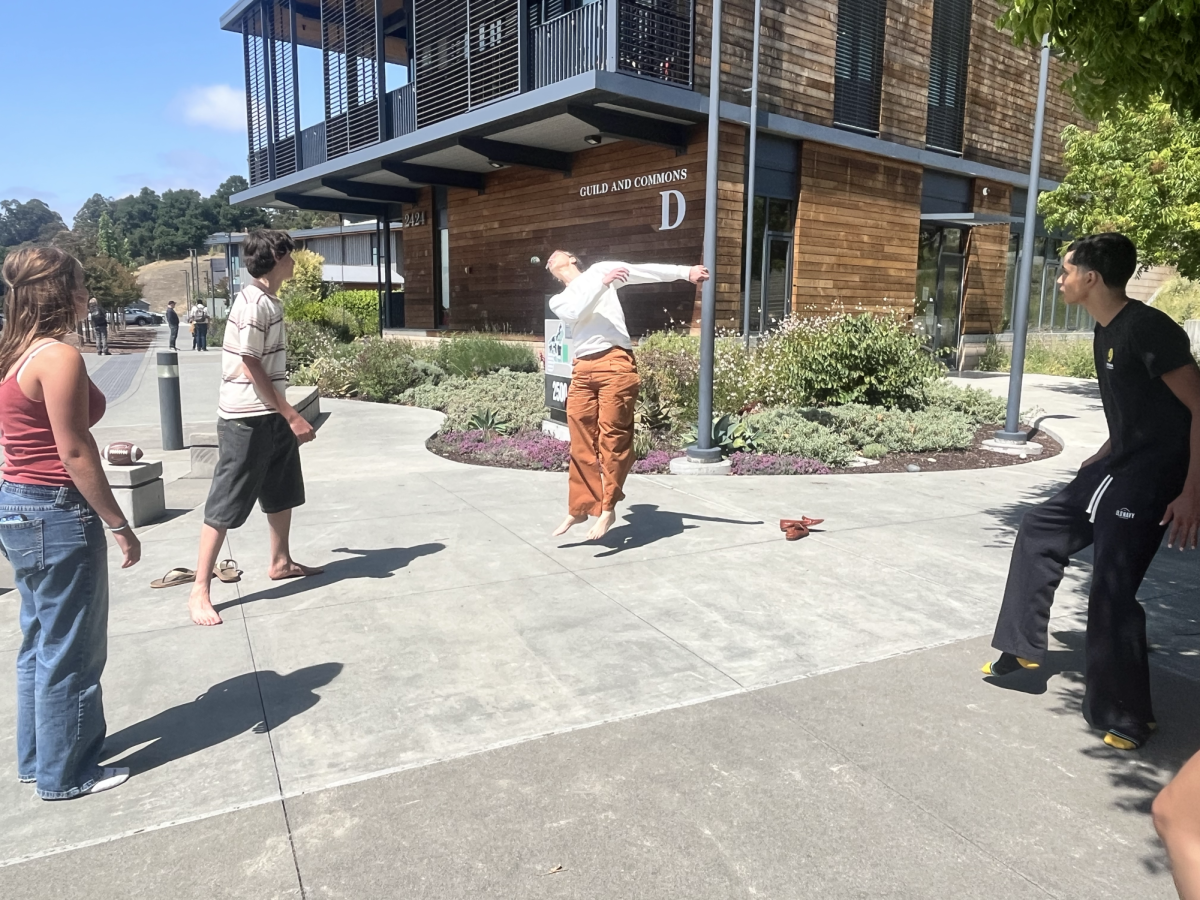


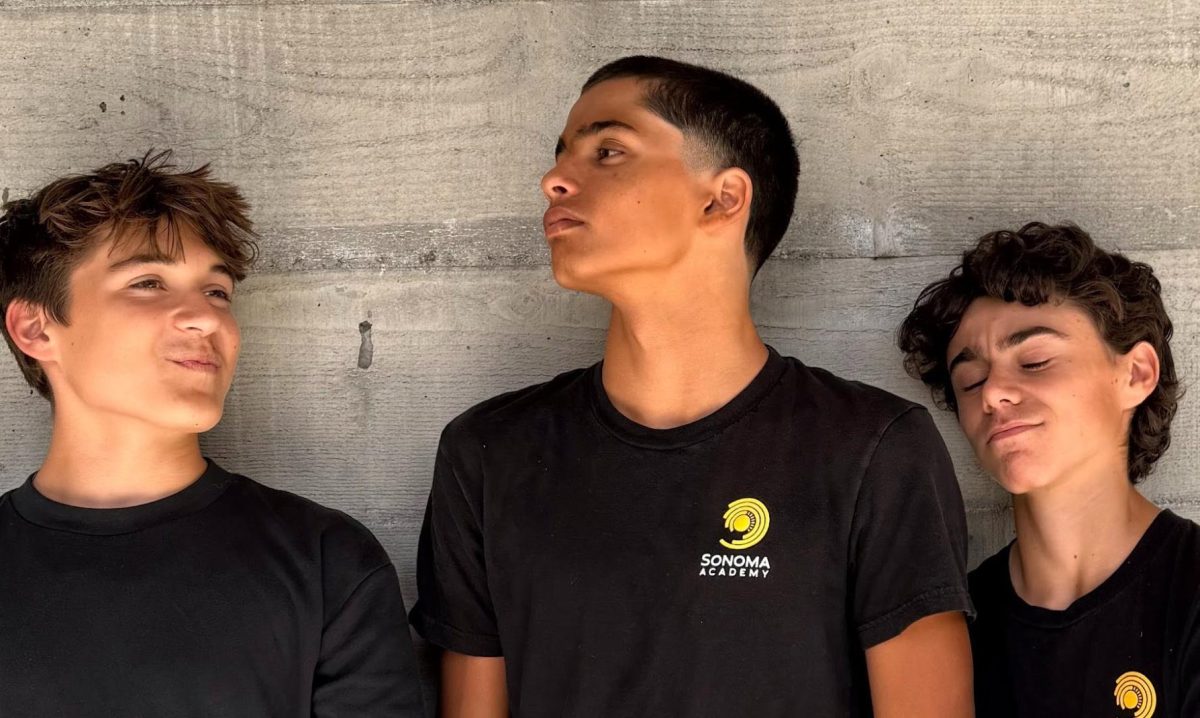












At Sonoma Academy, being a man could mean waiting your turn in the lunch line, splitting the last cookie, or graciously accepting banishment from the sack circle after your foot-eye coordination has proven defunct. It could also mean scrolling through media saturated with “alpha male” stereotypes, looksmaxxing and falling into the manosphere.
With social media’s influence on the SA community and the national shift in gender culture, there is no question that cultural norms and influencers’ ideologies bleed into students’ lives.
The digital world has allowed for many benefits: activism for important causes, outlets for donations and communication between friends. However, for every wave of activism, there is an equal tide of negativity. One of the most extreme examples of this behavior is misogynistic ideas that push back against feminism.
Misogyny, while it has always been present to some degree, became prominent online during the late 2010s and broadened its span into social media in the early 2020s. This came hand in hand with what is known as the “fourth wave” of feminism. While the fourth wave of feminism focused on empowerment and anti-misogyny, the surge of misogynistic ideology brought about the popularization of the “Manosphere,” which entails all things hyper-masculine and anti-feminist.
The sheer media popularity of the influencers that act as spokespeople for the manosphere makes it hard to avoid ideas of misogyny and insecurity becoming ingrained in the youth, even if those ideas show up in small, often unnoticed ways.
As student leader of Girl Talk, Hannah Perry (‘27), spoke in regards to how toxic masculinity appears at Sonoma Academy. “I think that at [our school], you don’t get the podcast, you know, like, the very overt toxic masculinity,” Perry said, “Less of what hurts people in this community is really intentional overt stuff.”
Perry went on to list some examples of the quieter ways that toxicity shows up: “What people pay attention to, what people choose to comment on, who people watch out for, who people choose to care about or protect.” Perry continued, saying these quiet occurrences result in an unequal workload: “A lot of times it’s easier for guys to just take a step back and know that things will be done for them.”
That being said, as with most things, there is some benefit to be drawn from the mostly negative culture of the manosphere. Some students have become fans of influencers within the manosphere, such as Clavicular, a popular media presence across platforms such as Instagram and TikTok.
Josh Lim (‘26) found some unique benefits to following male influencers online. “[They] kind of helped me to develop to the best form of myself.” Lim added, “I’ve been doing some of his practices that he recommends… It’s been transformational.”
Michael Henry, a psychologist who gave a passionate talk on being a man at Community Meeting, believes that “There are some men that are inspired to, you know, take positive action in their life. …they respond to that message of, “Don’t be a piece of sh*t”. [They’ll] start working out…get a job [et cetera].” This idea of singling out the positives offers a middle-ground approach to masculinity, abstracted from misogyny.
One could wonder, “Why is the youth so prone to the influence of the manosphere in the first place?” While youth are typically easily influenced and the manosphere was incredibly popular for a time, Humanities Teacher Rodney Fierce believes that there is more to it. Fierce explained, “When you silence voices, or you silence people, they will find someone to listen to them.” Humanities Teacher David Hyde added, “In the same way that the voices of boys and men have been silenced, so too have they been ignored a lot, right?”
Fierce and Hyde stated this in relation to the fact that while the culture of the manosphere is an amalgamation of misogyny and insecurity, it is also a fallback for those who lack direction.
In this case, Humanities teacher David Hyde and Fierce believe that the lack of direction amongst young men is rooted in societal detachment, nestled in the shadow of the feminist movement.
While feminism makes amends to the societal handicap put upon women and advocates for their needs, in recent cases, it has pushed the needs of men under the rug. Hyde explained, “As we rightfully paid attention to empowering young women and girls, [offering them] more opportunities and leveling a playing field… All of which is absolutely the right thing to do, I think we also kind of forgot about boys, and we just assumed boys have all the advantages, they’ll be okay. They’ll figure it out. They’re tough… and we’re realizing that, no. Boys do need our help just as much as girls need our help.”
Fierce added, “The answer to the historic disadvantagement of women is not allowing boys and men to suffer, or to pretend as if they don’t have problems.”
Fierce explained why toxic masculinity and its root causes have gone unaddressed, saying, “While our school might be progressive, and what we teach might be progressive, we are in a world that still very much operates on a gender binary. And all of our students are related to and raised by people who were raised in that world.”
Despite the strength of the modern-day gender binary, Fierce has been working with students and staff for years with the goal of nurturing a healthier understanding of masculinity.
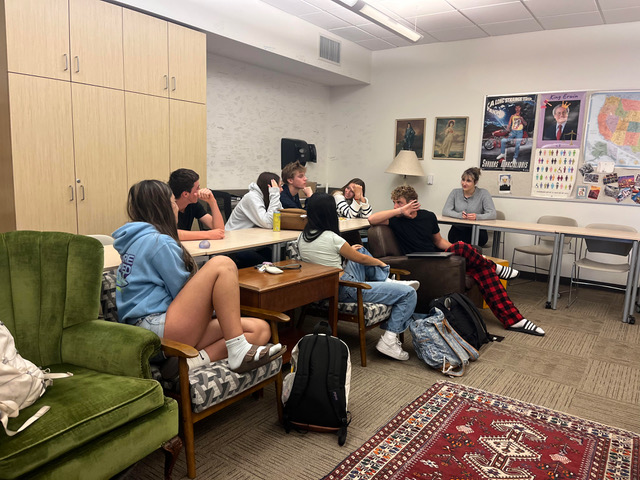
Having seen the lack of such nurturing since he first arrived, Fierce came together with Teacher Sourosh Amani to form Guy Talk. This group later came to be known as the Men’s Mental Health Collective and would possess a curriculum of serious conversation balanced with lighthearted fun. On paper, this was the perfect solution to allow men to be more open. However, upon taking a closer look, the time since the group’s last meeting is approaching six months. Despite what this may lead one to believe, Guy Talk is not something that will be left in the past.
Now, leading male figures at SA are making a stronger effort to make sure that male students get the space and time to develop their thoughts on masculinity in a healthy environment.
Guy Talk will be revamped as we enter the 2026-2027 school year, and additionally, an in-depth class on masculinity will be introduced into SA’s repertoire. Fierce and Hyde have handcrafted this class, and though Hyde will not be with us for the upcoming school year, Fierce continues to look into potential co-teaching candidates.
In a world where everything goes through perpetual change, from cultural norms to social media trends, we must not look to the past nor the future. Rather, we must focus on the now and solve our problems in this moment. In the words of Hyde: “The notion of what a man is is constantly in a state of becoming. And it is our imperative to figure out what that is in this moment.”

Ben Wrightsman • Jun 1, 2026 at 3:05 pm
when it says “misogyny began in the 2010s,” this means online?