











At Sonoma Academy, we are entitled. As a highly privileged, majority-white school, students are positioned within a system that proudly prioritizes individual experience, boasting the robust infrastructure, performance, and unique opportunities that make our community “So SA.” This title and the pristine imagery it evokes exist as a result of endless hours of tireless, often overshadowed work done by people whose names you likely don’t even know. While SA’s close-knit and supportive culture fosters a rigorous and effective educational environment, promoting confidence and engagement, it may also be responsible for the high rates of concerning and incorrect assumptions about behavioral expectations on campus.
Efforts to address entitlement at SA are loud: P.S. announcements, class discussions and conversations among advisories all attempt to confront the issue. Yet entitlement at SA is rarely explicit. Instead, it often appears subtly throughout our everyday decisions: Did you throw away that wrapper that fell out of your pocket? What about your plate full of leftover food after lunch? Did you double-check that you didn’t leave your paper towel balled up in the bottom of the sink? What about after school, when you crossed campus through the GAC, were you cautious of avoiding the freshly cleaned mop trails?
When examining entitlement in this article, my intention is not to assign blame, but to strengthen the integrity of the values our school promotes. It’s not a problem of bad kids; we show up daily in many other ways: Integrity while taking an exam, waiting patiently to chime in during class discussions, and saying thank you to teachers after class are all examples of kindness that are deeply embedded within our school’s culture.
So what is the problem?
I sat down with Humanities III teacher Rodney Fierce to discuss the entitlement he’s observed over his nine years at SA and how he thinks we can remedy it.
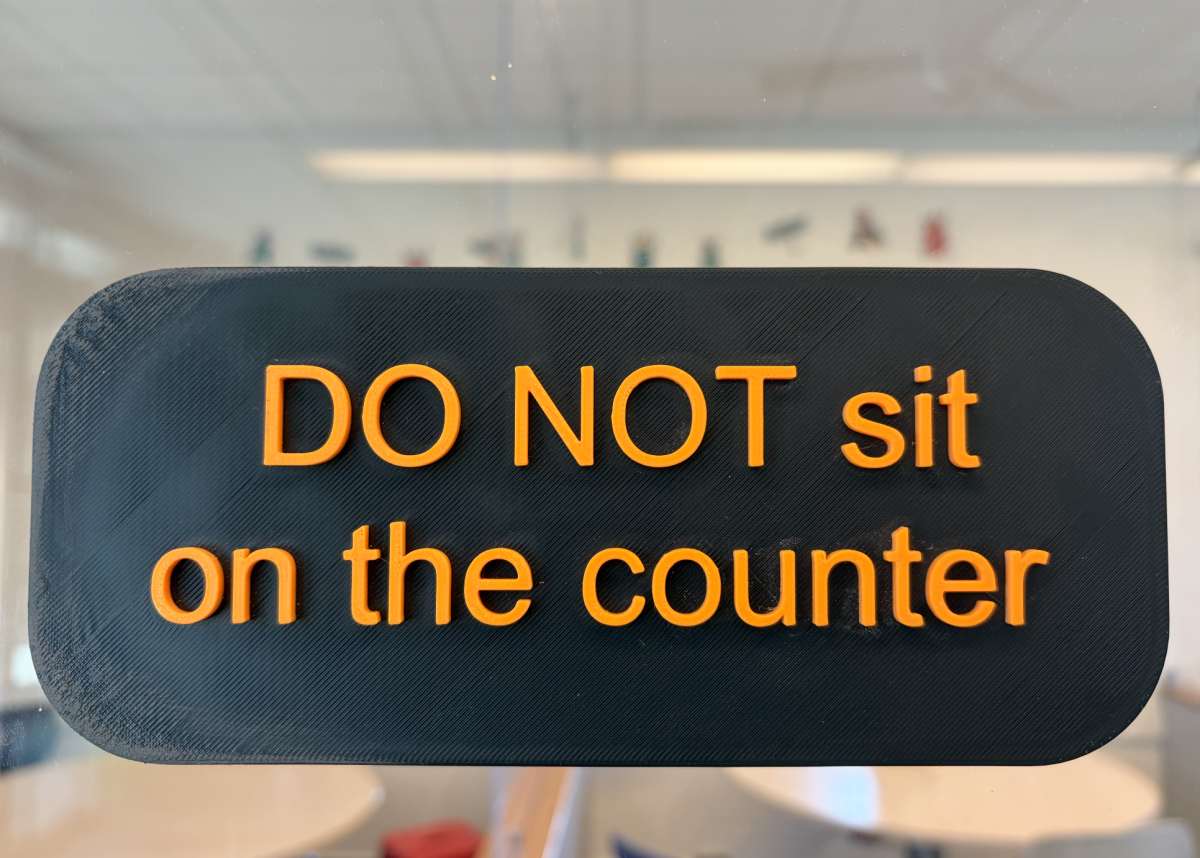
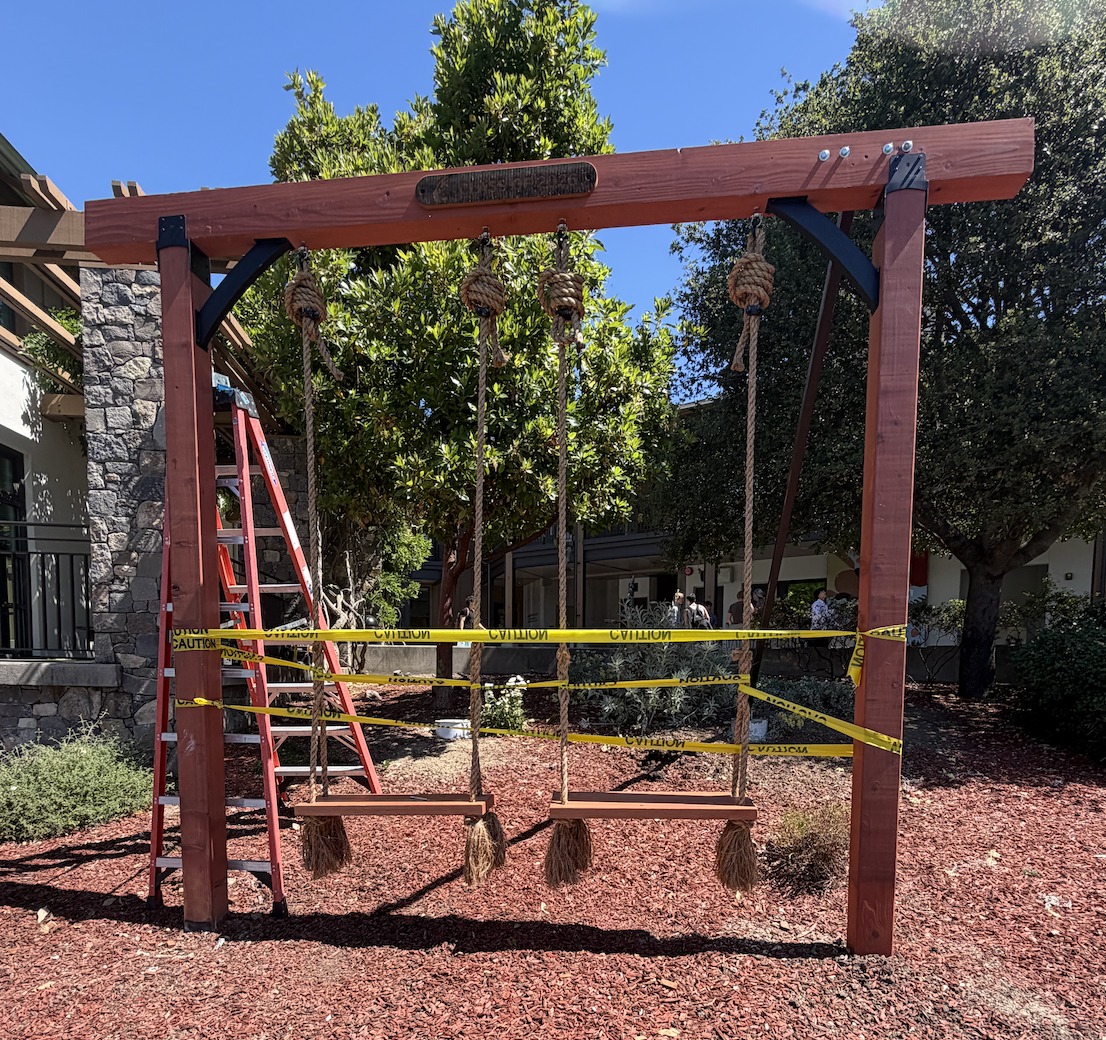
Rodney highlighted a recent incident in which students broke a handmade library counter by putting “enough weight on it that it cracked straight across,” likely due to standing on it.
You’ve likely heard of this issue, as the screen above the counter now dons a “DO NOT sit” sign front and center, right above the brand-new green counter.
So you know someone broke it, and you know it got fixed, but have you ever stopped to wonder what happens once you go home? I’ll tell you a secret: there’s no magic wand. When things are damaged, someone has to repair them, or in this case, remake them.
The custom-made counter was commissioned by the school and handcrafted by an artist who, upon receiving news that the first one had been broken, invested work, time, and effort into creating an indistinguishable replica.
While the damage may have appeared insignificant to some students, for Rodney, the damaged counter symbolizes what he described as a growing culture of apathy. He noted that some students have become overly accustomed to the constant service, “and so we don’t have to think about what we do or how we treat this campus or the people on it or in it, because there are other people who will clean up and fix the messes.”
Rodney has a unique perspective on this topic, shaped not only by his role as a teacher but by his relationship with Director of Campus Operations Travis Fierce, to whom he is married. This unique insight into the inner workings of Sonoma Academy allows him to witness firsthand the extent of the often invisible labor required to maintain and support daily operation.
According to Rodney, the shift towards negligence has become increasingly visible throughout his years at Sonoma Academy. Reflecting on his first year teaching at the school, he recalled an interaction that represented what he believes was once a stronger culture of accountability.
After a student of Rodney’s received a C in his junior year, his father emailed, questioning, “How did this happen?” “Why in the world did my kid get a C?”
According to Rodney, the message initially appeared to be the beginning of an all-too-familiar dispute over grades and academic responsibility. However, before the conversation could escalate any further, the student himself intervened, admitting he had ignored assignments and failed to follow through on opportunities to improve his grade.
“He took responsibility for the choice that he made,” Rodney said. “And that let me know that I was in the right school.”
Although Rodney emphasized that students generally treat teachers respectfully, he noted that entitlement often manifests more discreetly in the treatment of shared spaces and staff whose hard labor often goes unthanked.
“It’s easy to be nice to me because I give you grades,” Rodney said. “But the people to whom you don’t have that connection–how do you treat them?”
Rodney specifically referenced dishes, food and trash left throughout campus for janitorial staff to clean late at night. He noted that these issues became increasingly common following the establishment of school meal plans, as students no longer bore sole responsibility for bringing, managing, or purchasing their own lunches.
“When students actually brought their own lunches, no one dared to leave trash everywhere,” Rodney said. “It was only once the GAC opened that we began to see that, because now other people are serving you.”
Rodney explained, “That sort of lack of responsibility is something that [Travis] and I both were troubled by.”
Over time, Rodney said, these actions evolved beyond isolated messes into a broader pattern of disregard toward campus property and the maintenance staff. He also argued that our school has not consistently implemented systems of accountability capable of meaningfully addressing the issue.
As a potential solution, Rodney proposed requiring advisories to participate in regular campus cleanup efforts. He compared the idea to a disciplinary practice from his own private high school, where students who damaged campus property were assigned physical labor as atonement.
“You destroyed this campus, we’re giving you a physical job to do to make restitution to the campus,” Rodney recalled.
According to Rodney, directly involving students in the upkeep of campus spaces could foster a stronger sense of collective responsibility and awareness. “You’ll stop your friend from just throwing stuff on the ground because you know that you are going to have to pick that up,” he said.
The conversation also addressed the relationship between privilege, tuition and student attitudes. Rodney emphasized that paying tuition should not cultivate a sense of superiority or ownership over the school community. Instead, he argued, it should reinforce appreciation for the opportunities and labor that sustain the institution.
Much of the interview centered on the rigorous and indispensable labor performed by operations and maintenance staff. Describing Travis’ role overseeing campus operations, Rodney detailed the constant demands of the position: late-night emergencies, event preparation, and ongoing campus repairs.
“There’s not a single vacation we have gone on that is not interrupted,” Rodney said. “There are times when he has to stop what he’s doing in the middle of dinner and drive to campus to fix things.”
From addressing water main breaks to preparing for major school events, the work required to maintain the campus is extensive and often unnoticed precisely because it is carried out so effectively, Rodney explained.
Near the conclusion of the interview, we circled back to what Rodney considers the central issue underlying the conversation: empathy.
“I wish students would think about how they would feel having to be here from 7 to 10 p.m. cleaning up after kids who have access to an education that your own children might never have access to,” Rodney said.
He added that some staff members occasionally bring their children to campus during evening shifts because they cannot leave them home alone. Those children, he noted, witness their parents cleaning and maintaining a school they themselves may never have the opportunity to attend.
“[T]hat’s impactful for them,” Rodney said. “And I want it to be impactful for our students too.”

Ben Wrightsman • May 31, 2026 at 10:17 am
This school belongs to its community, which is a beautiful gift and privilege, and also a responsibility.
I often wonder if students had a greater sense of ownership of campus (and perhaps agency to design the school itself) if they would shoulder a greater responsibility to its care. Or, it’s possible they would feel even less inclined to contribute.
Gratitude to Rodney’s point about how facilities mgmt running so smoothly hinders its significance in the mind of the community.
And powerful to mention staff kids. We use “staffulty,” but the two groups are not even comparable in their treatment by students, parents, administrators. SA needs more staff voice.