













Two years ago, the Guild and Commons switched out its iconic porcelain dishware for single-use paper and compostable plastic products, a decision that left students surprised. Now, many of their questions remain unanswered: what prompted this change, are we staying true to our sustainable values and how are we going to move forward?
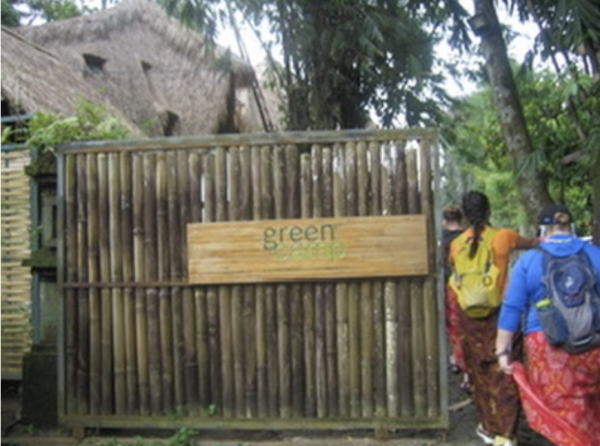
This year, SA students once again went to Bali over spring break as part of the Passport Program. Students spent this time at the Green Camp, a world-renowned regenerative education and immersion program connected to the international Green School, learning about sustainability and Balinese culture. We biked through rice fields, snorkeled, planted coral and kayaked through mangroves, all that good stuff. We were also collectively brought into the Green Camp’s zero-waste culture.
As soon as you step into the Green Camp, you see their low-waste mission in action. Open-air buildings are made entirely of bamboo, native plants are labeled across campus and the toilets were… unfamiliar.
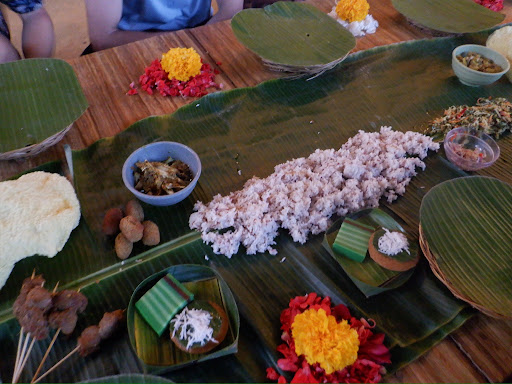
Every day, we’d wake up to amazing food piled up on bamboo baskets lined with banana leaves. We’d get in line, grab a small bamboo basket, place a banana leaf on top, take some of everything, snag a metal fork, eat our fill, then slide our nearly-clean banana leaf into a compost, placing our metal forks in a bin and our bamboo baskets in a tower.
Those banana leaves and the occasional uneaten food would go on to be eaten by the Green Camp’s pigs and cows, who would assist the composting process that eventually ends in their garden.
Every time I dumped my plate, I was keenly aware of the half-a-gram of egg I had neglected, or the piece of watermelon that hadn’t looked very good. I felt the wonderful pressure to eat everything on my plate and only take what was needed.
The trip to Bali was an amazing experience that left us connected to nature, curious, mindful and all those good things. It also left us confused. The Green Camp made sustainability look so easy! In comparison, SA was the most wasteful place in the world. Un-compostable compostable dishes; piles and piles of food wasted every day; trash lingering on campus until someone on the janitorial staff has the time to crouch down and clean up after us.
Composting bins, solar panels, and green spaces decorate our campus. But are these tangible things that actually mean something in the long run? Or do they simply hide the bigger picture of waste at SA?
Either way, I think we need to change. And that starts with our dishes. Luckily, a solution is here.
But before I get into that, why did we ever switch from porcelain dishes?

Last year, I spoke to Former Chief Financial Officer Rebecca Brown, and the decision to change became very clear.
One of Sonoma Academy’s proudest achievements is our Guild and Commons. The GAC comes with over a dozen awards and recognitions for its sustainably sourced building materials, solar energy use, low carbon footprint, reclaimed water and irrigation system and beautiful design. However, Brown pointed out that the GAC was not built for functionality, and the building is expensive to keep running.
Most importantly, the kitchen’s ability to handle over 400 dishes every single day is very low. The space for dishwashing is cramped and crowded. Our dishwasher can only handle so many dishes at a time. Because of this low capacity, many dirty dishes are left out, sitting, waiting for space to wash. The food sticks to the plates and even the powerful dishwasher cannot effectively clean them to a safe and satisfactory standard.
The initial solution, having existing GAC staff members take turns washing dishes, proved unpopular. But more than that, it was unsustainable in the long run. Brown and other administrators began looking into other options. This is where single-use products come in.
After evaluating the cost and environmental impact, the difference between the porcelain dishes and their replacements, according to Brown, seemed negligible: “At that point, the most important thing was our staff.” She focused on the working environment in the GAC, and the relief of the massive responsibility that single-use products introduced.
At that time, Brown claimed that we could always go back; every decision is reversible. Still, she predicted that we wouldn’t be returning to the porcelain dishes.
Are we going to use non-compostable compostable dishes forever?
Since this decision was made, Brown has retired, a new head of school is in place, FLIK is out and SAGE is in. Recently, I spoke with the new Chief Financial Officer, Juliet Clothier.
I asked why we were using compostable plastic when just small changes could be immensely beneficial while we work towards a permanent solution. Fully paper alternatives would be such a meaningful investment, although our community would still be contributing so much waste.
“My preference would be to have something reusable as opposed to something that, even if it’s compostable, gets thrown away because it still takes time and energy to compost it,” Clothier said, just before she shared concrete plans to implement a new dishwashing system.
Her goal was to buy a new dishwasher capable of managing all 400 meals eaten each day. But simple factors delayed the decision. “In your head, it should go really quickly. And then you get started and you’ve got to get a lot of input from people and get people to install,” she explained.
Also, “Because it’s a commercial kitchen, it has to have a certain temperature. The health department gets involved. [And] there’s a lot of pieces to that.” And, “When we get a dishwasher, that means we have to hire somebody to do the dishwashing. We have to go through with hiring the right person. They have to have background checks and they have to be vetted and we have to make sure they’re experienced. It seems simple, but those things take a long time.”
To even begin all of these lengthy processes, Clothier needed to evaluate the financial burden of the project.
When I spoke to her, she said, “I’m still waiting on cost analysis.”
Only last week, Director of Facilities Travis Fierce confirmed that these plans have been approved. According to him, the installation of the new dishwasher should be done by August.
Food Service Director Dramont Wright, who joined SA after reusable dishware was discontinued, explained why the new dishwasher, which will function with a conveyor system, will solve many problems.
“The dishwasher we have works really well, but it’s smaller and slow. You can fit one rack at a time, [but with a] conveyor, you can just keep it going.”
Wright is eager for this change.
“I do not like single-use products personally. I only use them because that is what the standard was [when I was hired].”
While the consistent cost of dishes for each person is significant, Wright said that the expenses were not the only reason for his dislike of the single-use products: “It’s the environmental impact it has.”
If we’re moving back to reusables, we’ve won, right?
I think that revealed a serious pattern at SA: we hold core values close, talk about them all the time, but lack the drive to do the work and follow through.
We spent two years using non-reusables, feeding 400 people a day, around 180 school days each year. Assuming that each person only used one plate, one fork and one cup (which is a very conservative assumption), weighing about 20 grams (another conservative assumption), we’ve put 2,880 kilograms (6,350 pounds) of waste in the landfill–because, remember, those products are not being composted.
To be fully transparent, those calculations are only estimates based on limited information. Still, we spent two years not thinking about our waste. Even if we were thinking, we spent two years not acting on our waste.
So yes, this is a win. But it’s not enough.
We’ve made moves in the right direction, and they need to be nurtured.
For example, we need to continue becoming more sustainable. Clothier brought up a main concern of the reusables: water usage. According to Fierce, since 2021, when we switched away from the porcelain dishware, we’ve extremely decreased our water usage.
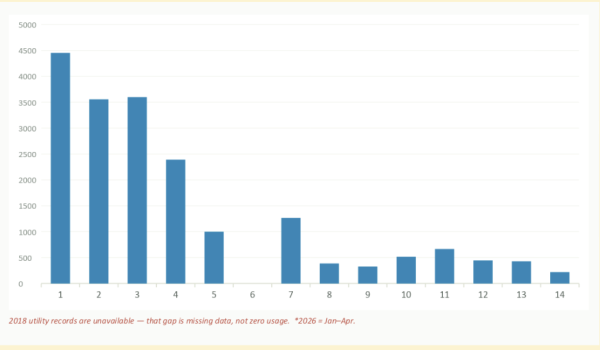
Water needs to be a key factor in future decisions around GAC dishes, in Clothier’s opinion. “We also have water issues here in Sonoma County. So if we went into a drought, we likely would have to shift to compostable stuff.”
If that were to happen, what’s to stop SA from returning to the not-so-compostable compostable plastic?
For Clothier, this entire process could benefit from focused student leadership. “I’m thinking about it and I’m working on it, but I would love it if it was student-led because no one’s going to listen to me about throwing things in the right spots and doing the things that they’re supposed to do. This has to be student-led.”
Director of Academic Services Oona McKnight is pushing for more sustainability leadership with a new Sustainability Taskforce, which recently had its first interest meeting. She’s excited for the potential problems it could address.
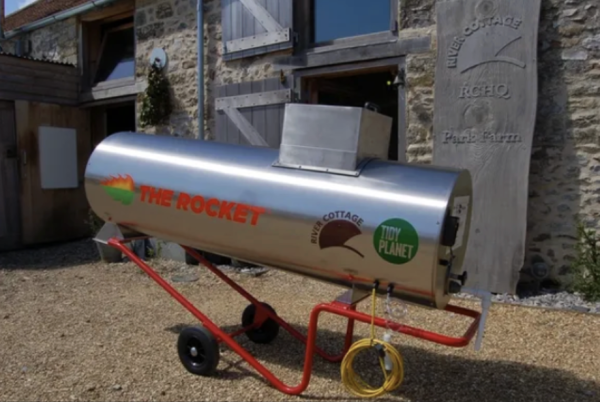
She thinks that there are a lot of potential solutions and improvements that need to be taken advantage of. One such opportunity is a state-of-the-art, high-quality Rocket Composter: “Another thing that we have is that we have this Rocket composter that can turn food waste into compost. It’s in the barn over there. Not being used.”
She is also concerned about SA’s waste organization in general. As you may have noticed, we essentially have three big bins in the GAC, with no labels. Even if you were fully informed and wanted to properly dispose of your food waste and single-use dishes, you wouldn’t know how.
McKnight noted that “Eric [Moes] and I have been talking about how he can make signs for the trash cans.”
To me, these seem like straightforward and entirely achievable steps to make SA a more conscious, sustainable place.
Hopefully, we’ll learn from the GAC plates, and we’ll never again find a solution two years too late. So I urge you, please be more mindful. Do you need to grab two burgers, eat half of each one, and then throw away the excess? Can we create a community where there’s enough trust that if and when we return for seconds, there will be food left?
And to administration, to decision-makers: you sincerely need to communicate why these changes are happening.
As McKnight remembered, “We didn’t hear anything about the decision to move to paper plates. I mean, we just heard like, oh, we can’t find a dishwasher. So we’re doing this temporarily. Yeah. And that turned into two years.”
Wright wanted to communicate that as we switch to reusables, “The main thing is just still making sure that you take the food that you’re going to eat so that there’s not a lot of food going into the trash cans.”
At the beginning of this transition, I have no doubt that plates will be left abandoned across campus, or piled up irresponsibly and full of food, or dropped in a chicken-nugget-induced stampede. It’s our responsibility–the ENTIRE community’s–to support the transition. Make it easy. Know why it’s happening. And don’t let laziness be an excuse.