

















As a young man growing up in an age where so many different views of masculinity are available online, I have been lucky to have positive influences in the form of my father, the Boy Scouts of America and other men who I believe “live well.”
However, there are many issues facing young men today, and most of these young men may not be as lucky as I am. Looking at the recent statistics, young men are more likely than ever to live with their parents after college, are less likely to graduate college and are less likely to have meaningful connections with others in their lives.
Many of these men, frustrated with the lot they are currently facing, are turning to the online “manosphere” for direction in their lives. They are finding competing opinions of masculinity, either one espousing that old-school masculinity is terrible for society and needs to be abolished, or the other end of the spectrum, that pushes toxic masculinity, demeaning women and fixing insecurities through power over others.
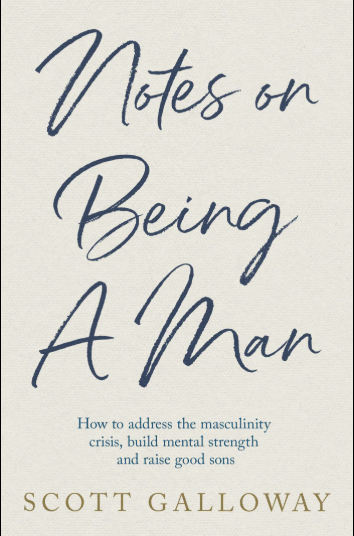
In his book, “Notes on Being a Man,” Scott Galloway, a serial entrepreneur, writer and podcaster, offers a balanced view of where masculinity should be from his perspective, using a compelling memoir style to illustrate lessons he has learned through his own experiences of “being a man.”
One of Galloway’s main points is this concept of “surplus value,” saying that what makes you a man is when you contribute more value to society than you take. This can be in the form of economic value, emotional contributions, relationships, or many other things.
He talks about men being able to “take body blows” or “lower the temperature of heated conversations,” being the rock that is sometimes needed in life. This seems especially relevant in such an inflammatory time that we live in, when online interactions bleed into the real world.
A twist on the traditional “self-help” book, Galloway structures Notes in a way that keeps it entertaining to read and allows him to speak to how his own experiences shape the opinions and arguments he lays out in each chapter. While reading, I never found myself feeling that the pace was too slow, or that I was bored.
Galloway may run into critics face first, when looking at his current life situation and where he is writing from. He’s a self-professed tall white guy with substantial economic resources. People may say that this disqualifies him from speaking on certain topics, but I would say that these become more of opinion pieces, something you don’t necessarily have to listen to. It is important to remember that this is just one man’s take on masculinity. Take from it what resonates with you, and think further about what doesn’t.
There are some topics that Galloway is absolutely qualified to talk about. As someone who is entering college and trying to figure out where I would want to be in the Greek system, Galloway speaks with an honesty that I’ve never seen around this topic. While he recognizes the harms that are often perpetrated by these institutions, he speaks to why he believes they are invaluable for the model of manhood that he lays out. He talks about the “guardrails” that come with frat life, in the form of the other men surrounding you, and the connections formed through shared (sometimes traumatic) experiences.
In a time dominated by the problems we have at hand, with so many competing, mutually exclusive views of what “being a man” should be, Galloway’s template may not be perfect, but it is a better summation than anything else I have seen out there.