









Sonoma Academy’s “Mean Girls: The Musical” ran from last Thursday, the 13th, to Sunday, the 16th. The show quickly proved popular: both casts were welcomed with a packed PAC for their opening nights. The musical, based on the popular 2004 film “Mean Girls”, follows Cady Heron, a new student at Northshore High School, as she discovers the bane of every high schooler’s existence: mean girls.
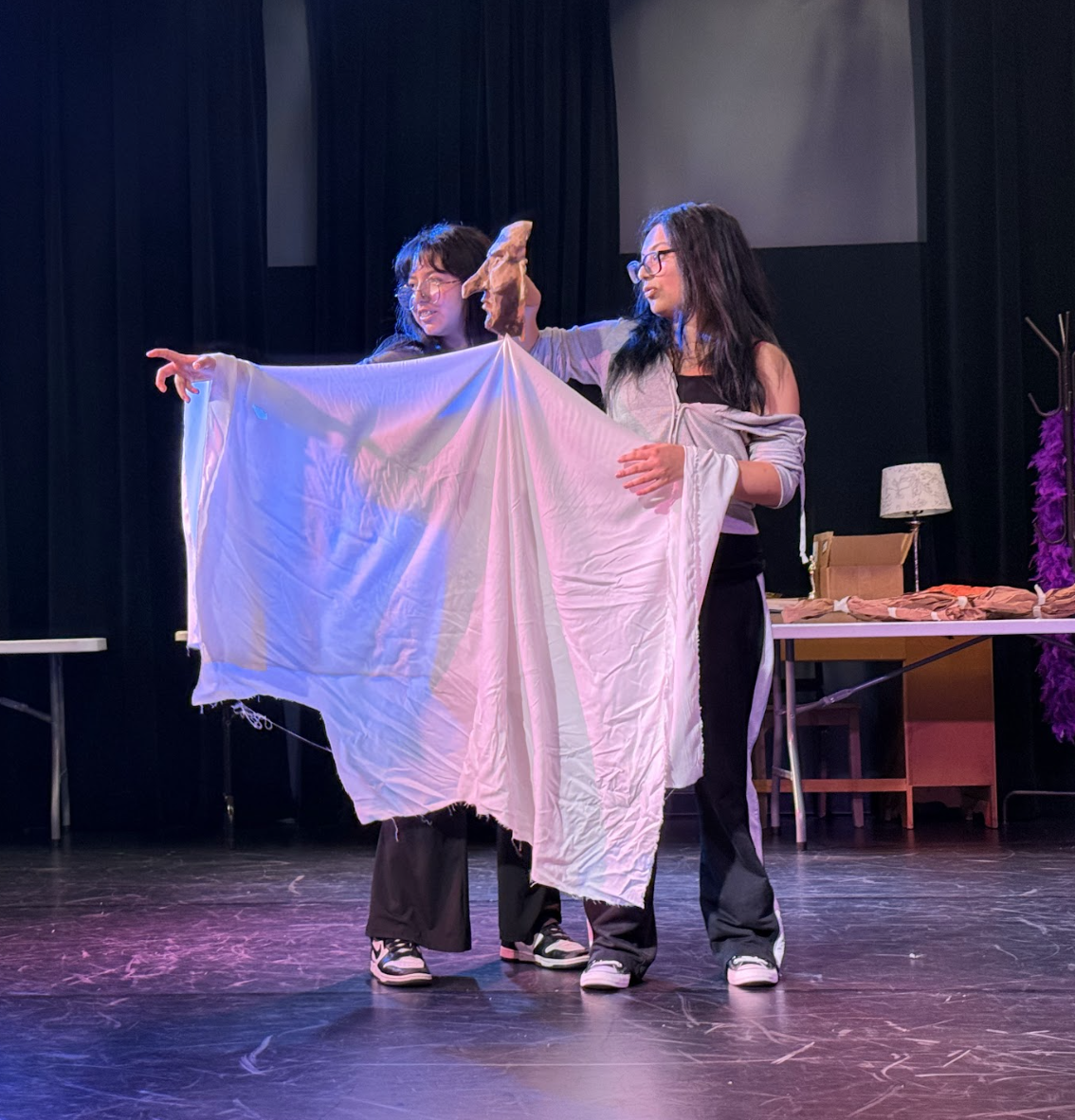
As I entered the PAC for the “Shore” cast’s dress rehearsal last Wednesday, I expected to find an environment like that of a sports game warmup: excited, organized and focused. I was not prepared for the chaos of over 40 students working simultaneously to prepare for the show.
“QUIET IN THE HOUSE!” echoed through the theater: mic checks had begun, and Assistant Director Cecily Hauser (‘26) wanted the band to shut the hell up. And they did. Immediately.
Traveling backstage, past the relatively hidden Chloe Yang (‘27) playing Block Blast in the wings among Regina’s furniture and the cafeteria tables, I was greeted by the entire cast and crew of “Mean Girls”.
Students were everywhere: mingling by the snack table, rummaging through the costume rack and pacing the hallway, singing. In the dressing room, ensemble members rehearsed dance moves while others curled hair, placed extensions and wigs, applied bright eye makeup and made gargling noises I have to assume were vocal warmups.

As the show began, I watched from the wings. Andrés Hernandez (‘26) and Andrew Yang (‘26) played rock-paper-scissors next to me while the opening numbers ensued: “Cautionary Tale” and “It Roars.” Transitions were quick: a whirlwind of rolling tables and an entire bathroom stall.
Soon, Hauser ushered me back to the audience so I wouldn’t be in the way of more complex movements just in time for “Meet the Plastics.” The rest of the first act appeared to go smoothly, although I am confident I wouldn’t have noticed any mistakes; I was too focused on the fog machine.
I snuck backstage again during intermission. I found Hauser, who appeared to be recovering from the chaos of the first act while repeatedly checking the time. She waited for 7:33 pm, when the second act would begin.
Finally, the show finished, and the students involved got to go home, sleep very little, and prepare to do it all again the very next day.
Why “Mean Girls”?
Theater Director Jen Coté made her selection for the fall musical cautiously: “Sometimes what happens is art imitates life and life imitates art. And when you do a show that’s got a little mean, nasty vibe, it can permeate into the cast. And you don’t even notice it happening, but suddenly the vibes start showing up on stage… We’ve had to keep that at bay so delicately and consciously.”
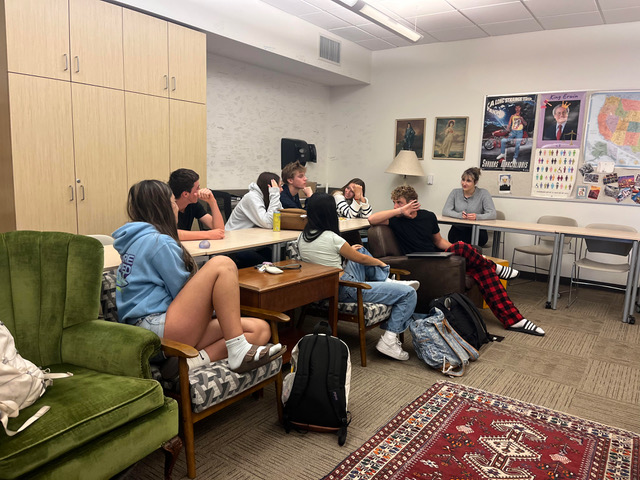
This awareness centered her approach to the musical. She even held an all-girls council after rehearsal one day to better understand how the show was affecting culture and individuals. “We talked about some of the trickier themes of the show – about being a girl and body shaming and bullying and insecurities.”

Coté also worried about how the administration would view the mature themes and language of the show. “If you work in a school district, you have to get it approved by a district, so you have to go way up. I just had to have a meeting with Percy.” She started by discussing with the cast: “Which of these do you want to fight for? Which of these are you guys cool to get rid of? And they, of course, want to do the most edgy. They want to say every bad word. They want to say every shocking joke.”
So, she went to Head of School Percy Abram: “We read through [the scripts] and he only had one line he wanted to change” – an alteration she agreed with.
She also highlighted the numerous opportunities “Mean Girls” gives to female actors, who make up the majority of students in theater. “It offers, with double-casting, eight lead roles. Eight. That will never happen again.”
Many aspects of the casting process were unique for this show. Coté collaborated with Casey Nicholaw: “he’s the original Broadway director and had a hiatus between shows and was like, ‘we’ll help you cast!’”
Coté wasn’t directly involved in casting any of the main characters, something she found refreshing. Nicholaw surprised her with some of his choices, placing actors in roles she didn’t think would fit: “But then they do it, and it’s perfect. So it turns out they know a thing or two.” In my rather unprofessional opinion, the casting was amazing, each member bringing something unique to their role.
The Students
Cady Heron, the main character in “Mean Girls: The Musical”, was played by Pen Malone (‘26) in the Shore Cast and Natalie Burton (‘26) in the North Cast.
Malone emphasized Cady’s dweebiness. She appeared delightfully unaware and unashamed of her out-of-place mannerisms, making her transition into Plastic-hood more jarring and apparent.
Meanwhile, Burton instantly adjusted to Cady’s new world. The audience could see her analyze every interaction. Cady became intriguingly manipulative and uncomfortable.
In Cady’s first visit to Regina’s house, the contrast between the actresses’ choices was on full display. Burton’s Cady quickly picked up on the Plastics’ demonstration of insecurity and immediately performed to match. Malone innocently played along, determined to fit in yet unaware of the intricacies of what was going on.
Their unique understanding of Cady’s character echoed throughout the whole show, but in this scene, both resulted in a hilarious moment: “I don’t know what’s happening, but me too! I’m ugly too!”
These small, yet very effective differences between casts were exciting to watch– each show was a fresh and different demonstration of the students’ range of creativity and autonomy as actors.
Juliette Coté’s (‘26) furrowed brow made for an infinitely confused Karen Smith, while Nevi Richard (‘27) was ditzy and smiley. They were both fantastically hilarious. As Karen would say, “Caucasian thumbs up!”
Mei Mei Sae (‘27) and Ruby Adams (‘28) were incredibly successful in portraying Gretchen Weiner’s complexity. Audiences simultaneously laughed at and sympathized with her insecurity and toxic relationships.

Regina George proved popular in both casts: a powerful, intoxicating character that enraptured viewers and Cady at the same time. Lulu Kimball (‘26) kept it direct: unattainable and unforgiving. She was perfectly terrifying and deadpan. Madeleine McKee (‘26) chose a more nuanced mean girl, making sure to smile at Cady’s face and gag behind her back. Her feigned innocence added humor to a rather enraging character.
Many other roles shone. Mrs. Norbury (Charly Newman (‘27) and Molly McNeil (‘27)) reminded movie fans of Tina Fey’s sarcastic and dry humor. Kevin G (Brendan Li (‘26) and Levi Mehl (‘27)) was an immediate fan favorite with his clean rapping and (really) unforgettable moaning. Bea DeCosse (’26) gave a hilarious peek into the insecurities behind the ultimate ‘cool mom,’ rocking a bright pink tracksuit during “What’s Wrong With Me?”
Jasper Mutz (‘28) was brilliantly flamboyant as Damien and nailed his mannerisms. Hayden Haveland (‘28), who transferred to Sonoma Academy this year, proved that he had mastered Aaron’s serene nature with every song.
Riley Musallam (‘27) was utterly remarkable as Janis Ian; her impassioned speeches were riveting, and her hatred almost felt tangible. Musallam stepped up when Riley Martinez (‘28), her double, became sick, performing at every show besides Sunday’s matinee.
The show would not be complete without the ensemble, large enough for the audience to understand the rumor-spreading and socially alienating abilities of a large high school. They shone in key numbers (“Apex Predator” and “Whose House is This” especially), and the dancing was even more impressive.

Artistic Direction
Dance Teacher Tayla Nielsen said choreographing for “Mean Girls: The Musical” was a challenge, due to the intricate songs. She “decided to go into a musical theater slash hip hop route, which a lot of the kids actually really excelled in.” Jane Murray (‘27) assisted her, choreographing a tap number for “Stop!”. Nielsen also noted the massive amount of new dancers involved in the show, who were intimidated at first, “but by the end of it, there are so many new shining stars.”
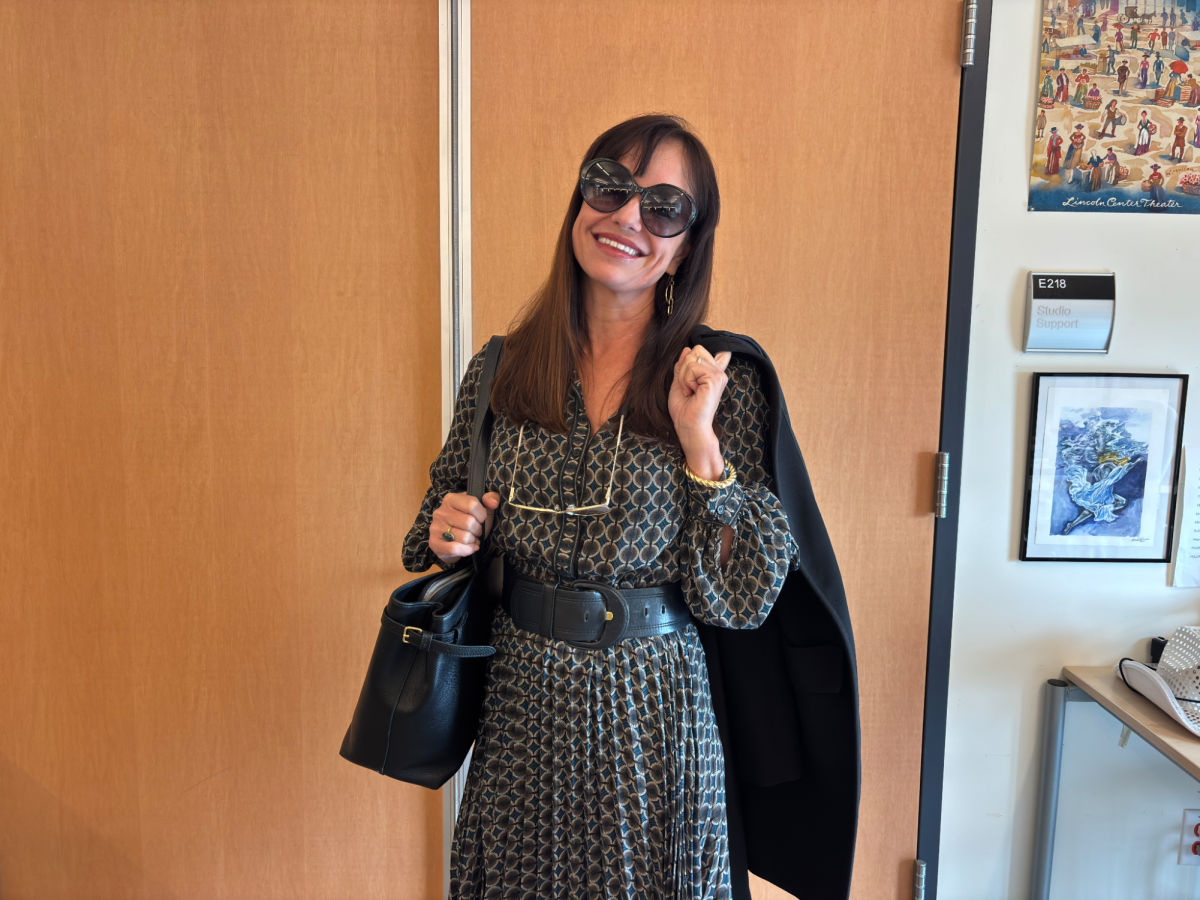
With such a large ensemble and a prominent cast of fashion icons, the show required intricate and widely ranging costumes. Sadie Tappan (‘26) and Charly Newman (‘27) gladly took on this role. Their process involves an intricate psychological evaluation of every character. Tappan selected white clothing for Regina to indicate her innocent facade, and “tight and awkwardly but flatteringly fitting” pieces for Gretchen to “symbolize her insecurities and how that really looks to her.” Her favorite contribution was Janice’s wardrobe: “I wanted to bring a little bit more artsy side to her outfits, not just the goth side that we normally see.”

These artistic choices go beyond dresses and insanely high heels (Seriously! How did they walk? Much less dance?!). Every lighting choice, controlled by Harper Clark (‘26) and Dana Meyer (‘27), and sound effect was intentional. My personal favorite? The colored spotlight that bathed Regina in red during “Somebody Gets Hurt,” and the repeated distortion of her voice, which amplified her superhuman and unattainable allure.
The costumes, projected sets, lighting and sounds amplified the “heightened nonrealism” Coté wanted for the show: “[Mean Girls] is not realism. It’s heightened reality. The projections don’t look real either– they look cartoon, because everything in this show is slightly heightened. The language, the dialogue, the characters. So the projections work to just give you a different location. And also for some comedy.”

Still, the props of the show were immaculately detailed. A quick flip through the Burn Book shows an elaborate insult for every cast member– sometimes multiple! Regina’s entire constructed bed was blindingly pink, and I marveled at her door– the construction of which must have involved rigorous testing, considering how many times it was slammed.
Every addition to the stage and set transitions was seamless, the result of meticulous planning by Assistant Directors Ivanna Barssé (‘26) and Cecily Hauser (‘26), Producing Artistic Director Maddie Castro (‘26) and Stage Manager Luisa Cholas (‘27).
The entire show reflects the remarkable cohesion between different students. In all, a ridiculously fun musical was presented to the Sonoma Academy community, and we pulled up. We will see how the show’s message impacts our interactions, but even after the opening nights, conversations were brewing.
Coté, in the Director’s Note of the play program, summed it up perfectly: “The story may be a cautionary tale, but its real power lies in its lessons—that people can change, that empathy matters, friendships can survive bumps, being true to ourself matters, and that sometimes it takes falling apart to learn how to be better to one another.”