














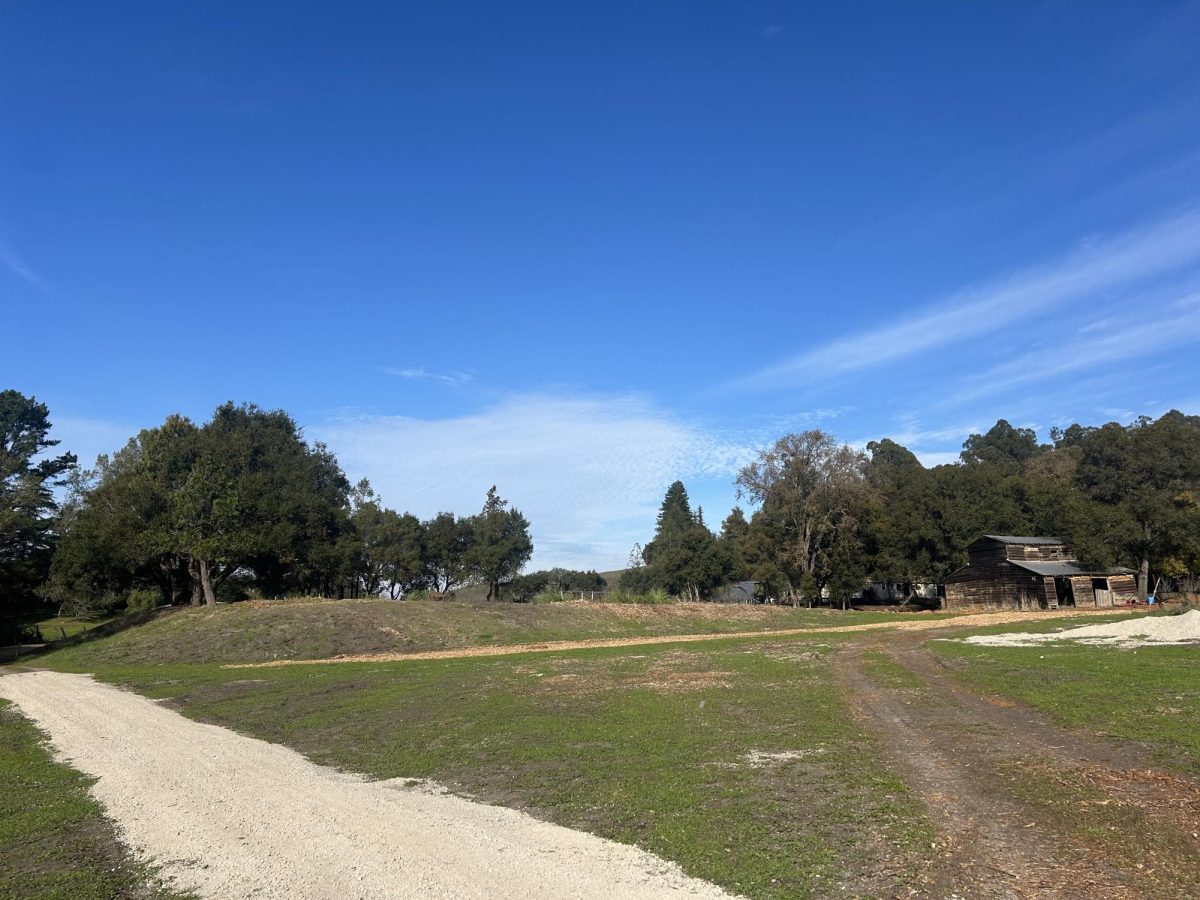
Tucked away in a little corner of our campus, just beyond the gravel lot, you can find the Sonoma Academy garden. Acquired in late 2023, the garden sits on a 5-acre plot of land, along with a pond, an old barn and a house.
This parcel, the Linwood property, is a tool for enhancing education and a space for quiet reflection, which holds many secrets as to what the land Sonoma Academy now sits on once looked like.
Students are not allowed to visit the area unsupervised due to safety concerns, but there are still ways that students can interact with it. One way is to sign up for the year-long Gardening and Horticulture Coyote Block class, or to join the Garden Club.
As one would expect, during the cold season, the garden is less busy. Co-leader of the Garden Club Lorelei Taylor (‘27) told me, “We were supposed to meet every other week, but it gets really tough, especially right now, we have fewer meetings in the winter because there’s just less to do.”
Humanities Teacher David Hyde agreed with her, saying that in his Coyote Block class, he “has like 14 or 15 gardening students, and when the weather was warmer, they were going out there twice a week for the whole work period with plenty of stuff to do. But then now that it’s getting into wintertime, we’re kind of splitting our time between work out there and work on some projects where they’re using some of the knowledge they’ve built out there.”
In the spring, the garden yields a lot of really great produce. Taylor explained, “They have a good amount of vegetables. They had corn and they had tomatoes. We have peas and some beans. I want to say we have squash and pumpkins.”
When the harvest comes around, they put it in the GAC, right next to the free fruit that the kitchen puts out. Just be warned that the people tending to the garden get first dibs:; as Hyde says, “Strawberries never make it out of the garden.”
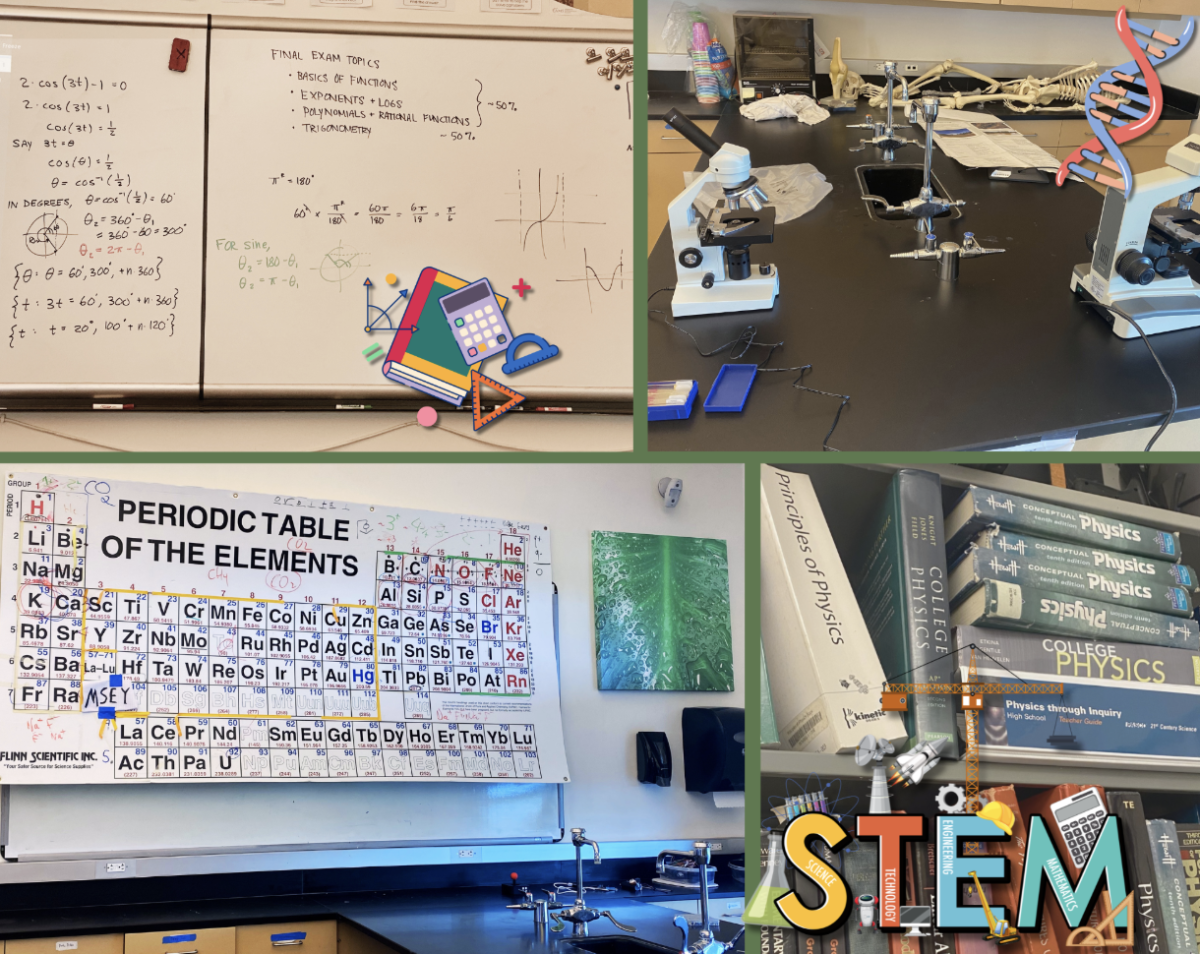
The garden is just one way that our community interacts with this area. The Linwood property is also used by our STEM teachers to aid in lesson plans or other experiments.
Jim Sweeney, who teaches AS Environmental Science and Earth Science, frequently takes his students out. He said, “I used it for probably five visits with the entire class for AS Environmental Science to do transects of soil quality in the garden.” He then added that the class also took water samples from the pond to study biodiversity.
Additionally, Sierra Labarge uses it in her Biology class, where she has students find sit-spots to do nature journaling. She also detailed how her Ecology of Sonoma County class interacts with the pond: “We actually do a pond study with this woman who comes in from the city of Santa Rosa, and she leads the study, and we test for different chemical presences and absences. And then we also do a macro invertebrate study where they collect different organisms from the pond, and then identify and analyze what is the presence or absence of those, and then use that to indicate the water quality of the pond.”
One student who relied on the pond for research is Tamar Knuth (‘26). Knuth tracked the levels of pH and dissolved oxygen in order to guide the Facilities team in their efforts to clean up the pond. She said, “I think that having the outdoor aspect of the class made me so much more excited to be there. And honestly, I was staying after school to be able to be down there working on that at the pond.”
It’s really great to have a controlled environment to collect data, but there are more ways to engage with nature than just science. Due to its isolation, the Linwood Property feels like a different world from the rest of campus. Its serene energy makes it the perfect place to meditate or practice mindfulness.
Humanities Teacher Laura Hansen explained that for some activities where students are asked to open up to their classmates, “there’s something about being in a natural space that is a little bit away from campus, that people are able to be themselves and open up a little bit more. It just shifts the energy.” She also takes students down there for her Zen intersession and in her literature classes.
Some secrets are only revealed when one takes the time to observe. According to Hyde, a former archeologist, “I have found artifacts over there, like evidence of Native Americans. Nothing crazy, but some little stone tools or evidence of stone tool making.” An important reminder that the land we call home once belonged to the Pomo people. By cherishing our space, we can honor the legacy of California’s indigenous peoples.
The future of the Linwood property is unclear. The pond will continue to change as more work is done to clean it up, and there is a lot of unused land. Both the house and the barn have great potential, but as of now, nothing has been done to either. Who knows what future projects will come, or how current ones will expand through the years, but one thing is for sure: the future of the Linwood Property holds exciting new ways to learn and connect with nature at Sonoma Academy.