











At Sonoma Academy, there has been a dramatic shift around conversations around Diversity, Equity and Inclusion, or DEI. Over the past few years, I’ve felt the structure and energy of DEI work on campus negatively change. As a current senior who has been involved in this work throughout high school, I’ve felt both the frustration of what’s been lost and the hope of what DEI at SA could evolve into.
During my freshman year at SA, my primary focus was on soccer. I didn’t expect to get involved in much else. However, I struggled with imposter syndrome; I felt that I didn’t belong at this school, and I would constantly be questioning myself.
Dot Kowal, former Director of DEI, was the first person who told me about the DEI club and suggested I come to a meeting to see if I liked it or not. When I arrived, I walked into a space where affinity group leaders and staffulty shared a short speech about their experiences. That experience really inspired me to do more in my community and made me feel like I belonged.
After that meeting, I joined DEI Club, where we would dive into different topics that were happening around the world and have difficult conversations about them. With Kowal’s leadership, DEI initiatives felt very organized. Every student felt supported when she was facilitating these meetings and guiding our conversations. She valued everyone’s opinion, leading to very rich conversations that benefited everyone in the room.
I also noticed that a lot of different people with different interests were passionate about DEI. Kowal brought together athletes, theater kids, artists and many more using Community Meeting presentations. This was crucial to keeping the program thriving.
However, after Kowal left, the structure of DEI leadership at the school headed towards a complicated path. SA later hired Jessica Walton as a Director of Student Experience and Belonging, a role that strived to incorporate DEI work and other responsibilities related to daily student life. However, the position also carries similar responsibilities as the Dean of Students, making it extremely difficult for one person to fully dedicate the time and focus that a sole Director of DEI role usually requires. This reflects a broader pattern in private independent schools, where employees of color are asked to take on additional DEI leadership roles while still managing their main role, creating an excessive emotional and professional burden on them.
At the same time, the national political climate has been making major strides to further distance itself from DEI initiatives and withhold any support. This is most evident in new government policies and major corporations rebranding their diversity programs. In this context, the absence of a full-time, dedicated DEI leader at SA has become more noticeable, and many students have felt the need to step in to help sustain programming and initiatives while balancing their own academic and extracurricular activities.
Alexa Torres (‘27) is one of the most involved members of the DEI Student Advisory. “DEI is alive through the students and staff that are passionate about it,” she said, “but it doesn’t have the same overwhelming support that it once did.” The issue is that without consistent spotlighting, DEI fades into the background, and we begin to lose dedicated people.
I think that the decline of passion around DEI may result in a lack of openness from the school to have difficult conversations. The negative impact of not having as much staffulty support means that the DEI program cannot thrive as much. Torres’s remarks indicate that the work hasn’t stopped, but it feels more dependent on a smaller core group of committed students and faculty.
A shared memory of what DEI used to look like when SA had a full-time director only exists amongst current seniors. This makes it difficult to do future work when the majority of students have not experienced a true commitment to DEI within our school.
In Kowal’s absence, Spanish teacher Daniela Delario has stepped up to lead DEI initiatives at SA. Daniela has led DEI club to field trips such as the Santa Rosa Junior College’s “We The Future” conference, taught a student DEI exploratory and a DEI student impact class.
When I spoke to Delario, she emphasized the importance of having a Director of DEI who was solely committed to those initiatives. When that position was not replaced in the same way, the culture shifted.
The decision from SA not to rehire a Director of DEI was never explained to the students. Delario said, “After Dot left, there wasn’t really anyone supervising the work that students wanted to do the way Dot did.”
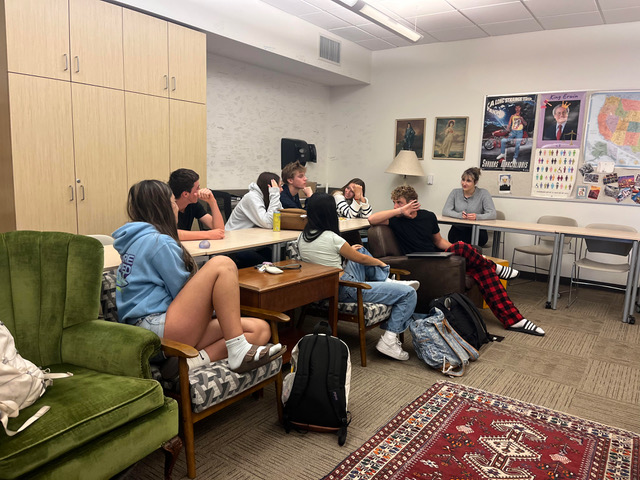
From my perspective as a student, I’ve felt that absence too. Ideas often feel scattered and don’t come to fruition. While Delario now serves as the head staff member for DEI Advisory Council, she’s also a full-time teacher, and even she acknowledged that it’s often difficult to sustain momentum with just twenty minutes a week of meeting time.
This lack of priority for DEI has had negative effects on students. Aurora Martinez (‘27), who joined the DEI Advisory Council last year as a sophomore, shared about hesitation to participate in initiatives. When asked about how safe she felt about sharing her true opinion on campus, she gave a “strong medium,” feeling comfortable when she shares the majority view, but not feeling too sure about expressing something that would put her in the minority.
Feeling unsafe in any way to share an opinion on campus should be a clear cause for concern, as that does not make for a community focused on equity.
However, students still care deeply about DEI and are committed to revitalizing it. Torres described the euphoric feeling of traveling to a national leadership conference.“I realized that there are so many students like me,” Torres said.
That feeling can be an extreme relief, as a lot of the time, it can feel like we as students are alone in trying to improve certain aspects of our school and may sometimes feel hopeless.
Martinez shared about the Latine Affinity Group being the space where she formed a lot of unlikely friendships. Daniela emphasized that DEI work is for everyone, not only for students of color, and also that understanding your culture and where you come from strengthens the whole community.
It’s important to note that our school is not lacking in passion for DEI but rather in infrastructure. A dedicated Director of DEI could bring back the proper facilitation of coordinating events, supporting students, and creating consistent programming.
Delario imagined a dream DEI program at SA would consist of a DEI Department, to further recognize that this work takes up a great deal of time and energy.
Torres agreed, saying, “It would be powerful to have a director solely dedicated to DEI and the student experience to make sure ideas don’t lose momentum.”
However, it would still be unfair to say DEI work at SA is fading. In some ways, it feels like it’s slowly rebuilding to become something stronger. Meetings have been feeling more structured, and students are showing up more than last year.
The overall atmosphere at SA right now feels cautious but hopeful. We are navigating a more complicated environment. The school feels different from the “pre-COVID SA era” many people reference, but we can’t go back, and maybe we shouldn’t. But we can learn from what worked and what didn’t to build a better future for our school community.
This year brings new promise for DEI. The DEI Student Advisory has restarted in a more consistent way, and students are once again bringing forward proposals and action plans.
Torres said, “Attending this leadership conference in Washington D.C. allowed us to design a community-centered fundraising event that would uplift members and share our resources.”
That kind of vision is what true progress looks like. It feels like DEI is on the right track again.
DEI should not just be implemented in a single area or program; it should be implemented in all areas of our school. Whether it’s head councils, student engagement committees or to open up all affinity groups meetings to all students. And if our school truly values growing DEI at our school, it will take both the students and the administration committing to it together.
Ben Wrightsman • Mar 18, 2026 at 5:24 pm
ty Elian, really well done 🙂