











Sonoma Academy’s campus is made up of more than just buildings and outdoor spaces; it’s shaped by the stories behind them. From early student traditions at a lone tree on a hill, to a handmade toaster that became a campus landmark, to performance spaces that have evolved, each place has its own origin and meaning. Even when SA was located at the Luther Burbank Center, alumni described similar moments of gathering and connection, showing that these traditions didn’t start in one location but have been part of the school’s culture and history all along.
ZIEGLER POINT:
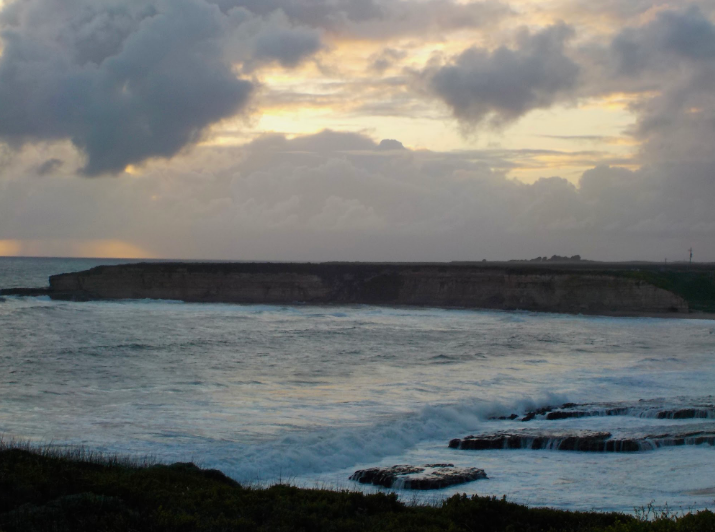
Ziegler Point has a different vibe than other places on campus. It’s not usually crowded, and compared to the rest of the campus, it offers a quiet space that makes you slow down a bit. You can see the beautiful landscape of Taylor Mountain while enjoying a light breeze. It’s the place where people go to sit with their friends, do homework or just think!
A lot of students use it as a space to relax. You will see people sitting on the rocks with their laptops or notebooks, and it’s a nice space for quiet when you need to lock in or just step away for a bit. Theater Director Jen Coté described this as being able to “snap out of it,” explaining how spaces like this allow students to reset and chill.
At the same time, Ziegler Point isn’t just known for being peaceful. Over the years, it has also built a reputation for something mysterious…
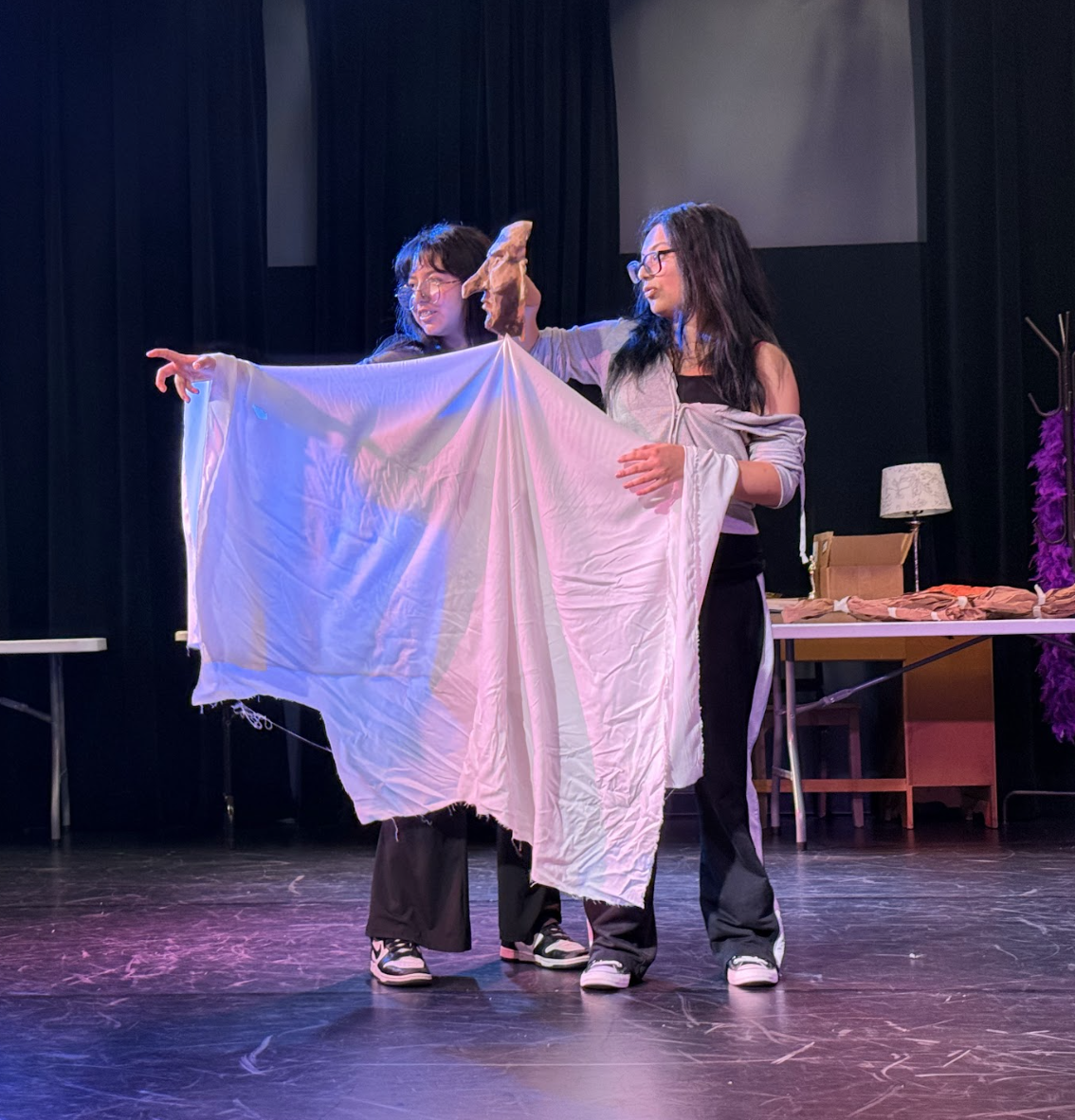
During the preparation for the school’s performance of Metamorphoses in Spring 2025, Coté spent a lot of time near Ziegler Point and described feeling a strong presence in the area. While she didn’t describe it as something clearly visible, there was a sense that the space held more than just the physical environment.
Humanities Teacher Jamie Murray talked about similar experiences, but also noted the presence was something hard to explain, saying, “At first, the ghost was sort of a benevolent figure, and a kind figure. And it was more of a vibe than a visual thing. You’d sort of see a dark shape sometimes through the corner of your eye and know that that was the ghost. But it was a friendly ghost, right? It wasn’t really doing anything, just sort of observing.”
But there is more. According to Murray, even the cleaning crew began to notice something unusual. He explained that “they were refusing for a while to even clean Brandon’s room solo, so they insisted on cleaning Brandon’s room as a pair,” which only added to the growing sense that something about that area felt different.
There are many stories about what (or who) might be connected to Ziegler Point. Some believe it could be a former student, others think it might be tied to the Native American history of the land. Director of External Relations Kim Eber explained, “There’s a ton of spirits here on this campus,” and many people see them as something that watches over the community rather than something to be afraid of.
Even with all these stories, we still don’t know the whole truth, but that uncertainty might be part of what makes Ziegler Point so interesting. It’s somewhere between a peaceful, breezy space and a place with unanswered questions.

THE BUCKEYE TREE:
Before SA fully became the campus it is today, the Buckeye Tree was already an important spot for the school community. It wasn’t just a pretty landscape on a hill; it was where the school’s earliest meetings about the future of SA were held.
Murray explains that in the early years, when the school was still at the Luther Burbank campus, students and teachers would come up to the Buckeye Tree several times a year. He says, “We owned this property, and we came over here four times a year, every year,” and the trip became a routine long before buildings were even constructed.
Getting to the tree was not simple back then. Murray describes how the group would hike up because there was no real road or developed campus yet. Once they reached the top, the Buckeye Tree became a gathering place where everyone would stop, sit, and spend time together. He says that the school would “have lunch, everybody would pack a bag lunch, we’d do a picnic, we’d listen and play music.”
But those early visits were not just about being outside and having a field trip; they were about imagining the future of the school. Students would sit together and think about the potential of the new SA campus. Murray describes how the faculty would “have students kind of go off and journal and kind of envision what the school would look like when buildings were here and when we had more people here.”
Murray reflects that during that time, the school was much smaller and more informal. There were activities that made the experience feel very different from what the school is today. He said they “had a drum circle because we were a lot more of a hippie school back then.” In these beginning moments, the roots of the new Sonoma Academy began to take shape.
Now, the Buckeye Tree still exists in the same spot, but its meaning carries the history and remnants of the students who came before, whose ideas shaped what SA embodies today. The Buckeye Tree represents not just a place to sit or look out over campus, but the moment when Sonoma Academy was still being imagined… before it was fully real.

HORTON HILL:
Horton Hill is the hill where the Buckeye Tree is located, but it’s also a meaningful space on campus. It was named after Sam Horton, a founding STEM teacher at SA, and now the hill carries both his memory and his connection to nature and biology.
Murray explains that naming the hill after him just made sense. He describes Horton as “a wonderful human being” and “a great science teacher, beloved by everybody.” He also explains how Horton’s teaching didn’t stay inside: he would take students outside, using spaces like the hill and the Buckeye Tree as part of the biology class.
STEM teacher Darren Duarte adds to this, remembering how much Horton’s work was tied to the natural world. He says Horton’s classroom was “just filled with life,” with “snakes and lizards and salamanders and all kinds of cool stuff.” That same energy carried outside, onto the hill itself.
Because of that, Horton Hill feels different from other paths on campus. It’s not just a pretty landscape; it carries the legacy of an amazing teacher as well. It also connects directly to the Buckeye Tree, so the hill feels like part of the whole space, not just a separate path. According to Jen Coté, it’s a place where you can “look down on our school and the life and the journeys… and get perspective.”
THE TOASTER:
One of the most recognizable and maybe confusing landmarks on SA’s campus is the giant toaster in the cafeteria. For new students, one of the first things they wonder is “why is there a giant toaster in the middle of the GAC?”
The answer goes back to a former student, Sam Lasseter, and a tradition called Tea and Toast. According to Kim Eber, Lasseter was “an amazing artist” who originally created a smaller papier-mâché toaster while he was a student. However, over time, the original toaster began to fall apart. Art Department Chair and founding teacher Hillary Younglove explains that “papier mache doesn’t hold up to the elements… and over time, it kind of started to just deteriorate and fall apart.”
Even though the original toaster didn’t last, the school didn’t want to get rid of it completely. The toaster was tied to Tea and Toast, a program where students could leave class for a short time in the morning to have tea and toast together. Eber describes it as “a beautiful thing in theory,” explaining that it was meant to be comforting and symbolic, like “a little piece of toast and tea will warm your heart and fill your belly.”
Years later, Sam Lasseter came back to SA with a new idea. Eber explains that he reached out and said, “I want to dedicate a large part of the next year of my time to creating a new toaster that will withstand the elements and will withstand the test of time.” The school agreed, and during a convocation, the new toaster was revealed to the entire community.
Eber remembers the moment clearly, describing how “he came and presented the toaster to our community as a gift from a really wonderful alumnus to the students of Sonoma Academy.” After that, the school had to decide where to put it. They ultimately chose the center of campus because, as Eber explains, “it needs to be in the heart of campus. It needs to be right in the center.”
Now, even years later, the toaster is still treated with a surprising amount of respect. Eber points out that “I’ve never seen one of our students climbing on it or playing with the plug,” which she says “warms my heart.” Even if students don’t know the full story, the toaster still represents an important tradition.
The toaster also reflects a bigger part of SA’s identity: student-created art that becomes part of the campus over time. While some pieces come and go, others (like the toaster) stick around and become part of the school’s story. It’s not just a random sculpture. It’s a reminder of creativity, tradition and the way students can leave something behind that lasts.
THE PAC AND THE FITZ:
The Performing Arts Center (PAC) and the Fitzsimmons Black Box Theater, also known as the Fitz, show how SA has grown over time, especially when it comes to the arts. While the PAC is the newest building on campus, the Fitz was once the center of almost every performance and gathering at the school.
Before the PAC was built, the Fitz was the main performance space. Duarte says, “That was our theater. All of our productions, everything [happened there] because that was our space.” At the time, the school was smaller, so the space worked, but it was tight. He describes it as “a more intimate space,” where “you were closer to the stage,” which made performances feel more personal.
Murray also remembers how quickly the school outgrew it. He says it was “always packed” and that eventually the school had to move community meetings into the gym, which he described as “a huge bummer.” Even though the Fitz was important, it couldn’t keep up with how much the school was expanding.
The Fitz itself was created thanks to the Fitzsimmons family, whose son, Chris Fitzsimmons, attended Sonoma Academy in 2009. Murray describes them as a “great family,” and the space was named in their honor as their contribution to the school. Even today, the Fitz is still used, but in different ways than it was originally intended.
The idea for a larger theater had actually existed for a long time. Eber explains that the PAC was “always a part of the original scope” when the school moved to this campus, but it took years before it finally became a reality. Plans were delayed multiple times, including during COVID, when the school decided “it seem[ed] tone-deaf to build a big theater” during such a difficult time.
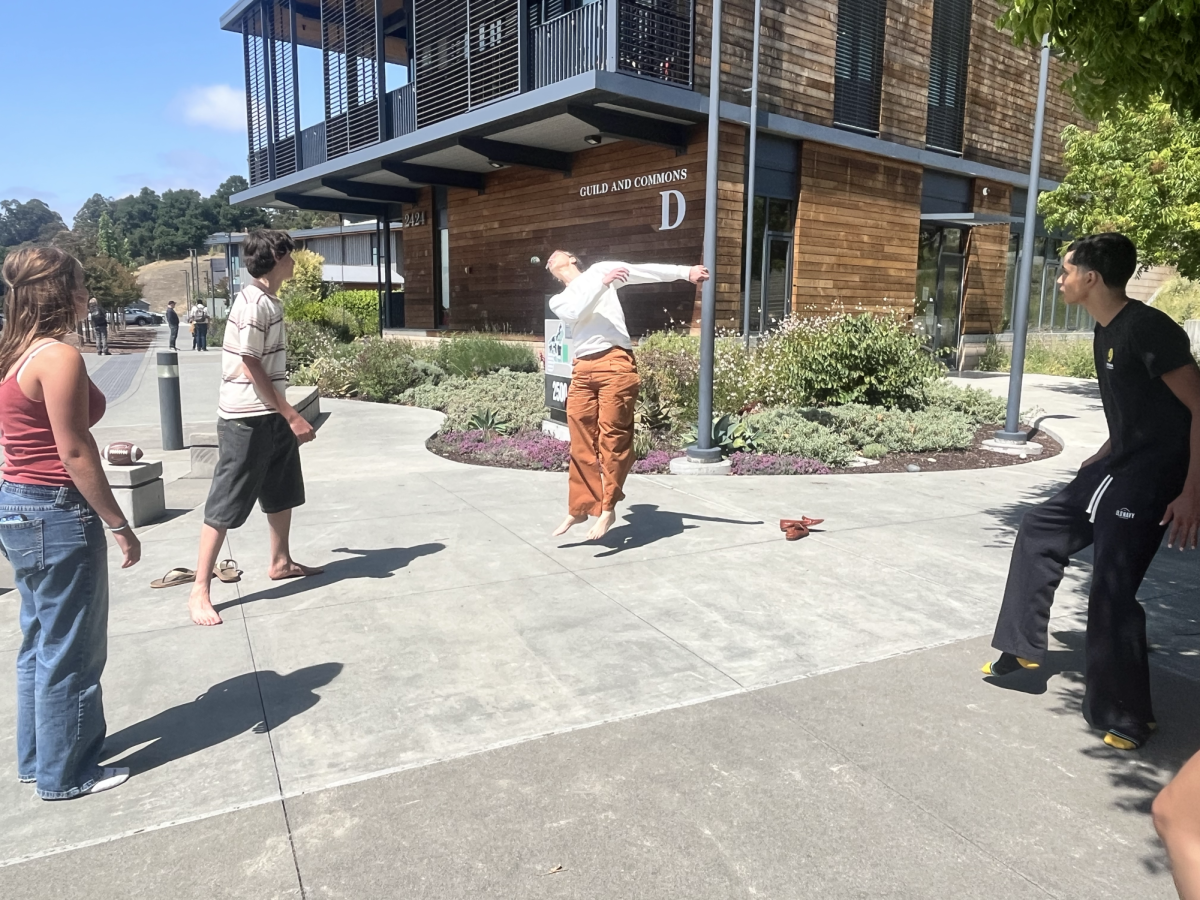
When the PAC was finally built, it quickly became the central gathering space on campus. Eber remembers the first show held there was the Dance Corps 2024 show, describing how “there wasn’t a single seat that was open,” and how she “couldn’t stop crying that whole night” because of how impactful the performance was. For her, that moment showed exactly why the PAC was needed.
Even with the addition of the PAC, the Fitz hasn’t lost its importance. It has been repurposed into a classroom and smaller performance space, showing how campus spaces can change over time while still holding onto their history. However, a couple of weeks ago, the Fitz briefly returned to its original purpose, hosting a jazz performance, one of the first shows in the space in a couple of years. As Eber put it, the performance “felt like a bit of a return to the intended purpose of that room,” almost making it feel like the Fitz was quietly reopening as a performance space again.
Together, the PAC and the Fitz represent two different stages of Sonoma Academy’s growth. One reflects where the school started, and the other shows what it has become; both spaces give students a place to create, perform, and unite.
So hopefully, knowing the history of these places will give you more appreciation for not just the beautiful campus we have, but also the history behind it. Whether it’s Ziegler Point’s ghost, the remaking of the toaster, gatherings around the Buckeye tree, or the evolution of our performing spaces, they all form the unique school we have now. So next time you walk around campus, remember the story and the legacy these places carry.