














Every year, the seniors at Sonoma Academy go through a rite of passage: college applications. They can be spotted working in the library during free periods, asking questions at college visits, or heading down to their counselor’s office for a meeting. While this process is time-consuming and sometimes stressful, SA students have their own methods of managing their time and balancing the many opportunities vying for their attention.
One of the greatest resources SA has to offer is the college counseling department. Their work doesn’t end with reviewing applications; rather, they take on a more active role in advising students and helping them grow not just as applicants, but as people.
Rolando Cristostomo, Director of College Counseling, and Katie May, a college counselor at Sonoma Academy, oversee the college admissions process every year. Cristostomo’s approach to college counseling is all about fit.
“It’s about looking at all aspects of this. Academic fit, social fit, financial fit,” he said. “Trying to understand and contextualize all that from the very start of this process creates a happier and more satisfied student at the end.”
Another thing that Cristostomo takes very seriously is time management. He and May pushed very hard for juniors and seniors to have a dedicated free period to do college-related work.
“If you can actually utilize those seventy minutes a day during the school week, you should be able to complete all your tasks,” he said.
Cristostomo and May’s main goal with the free block was to reduce stress for students and make it easier for them to prioritize rest and academics above college applications. This is something that they emphasize while working with students.
“Block yourself out,” Cristostomo said, “if you know something is due on a certain day, don’t be doing it the night before. Time management is key.”
Lola Pavlak (‘26) learned this from experience. “Start earlier than you think you should,” she said.
“Having a game plan and staying organized helps; writing down everything you need and everything you have and then filling in the gaps is a good way to go at it. It’s hard to hold all of it in your head at once.”
Many seniors, particularly those interested in careers in the arts, are balancing their passions with school and college applications. Pavlak, who is applying for a 2D animation major, said, “You definitely need to find a way to separate the art you’re doing as work from the art you’re not doing as work, because otherwise it all becomes work. It’s the same thing as working from home; having your office and your bedroom separate.”
Penelope Malone (‘26), who is applying for a Musical Theater major, said, “Theater has been an outlet for me. If I have a stressful day at school, or a test, sometimes it’s good to know I can go to theater later.”
She added, “I’m in Mean Girls, playing Cady Heron, which is a big role, so I don’t have a lot of time immediately after school. But when I get home, I’ve been trying to spend time with my family and relax. If I don’t do that, then I go a little bit insane.”
Students applying for programs in the arts often have to send in portfolios and auditions of their work, depending on their major. Malone recommended, “Get a coach outside of school– applying for theater programs is a very different process from most college applications. Continue working on your craft. If you can, apply for some summer programs; I’ve really grown as an actor through those.”
Pavlak advised, “If you don’t know what to do, go on YouTube and look at accepted portfolios people did. Lots of them, not just the first few, but see what people have done so you have a pool of what it looks like.”
Essays are also a large part of the college process. Every student has to write a personal statement, an essay encapsulating who they are, in addition to supplemental essays to help individual colleges get to know them better.
Saanvi Kohli (‘26), who is applying for a Biomedical Engineering major, said, “I’ve found that running ideas by my parents and peers and just getting external input is very helpful for essays.”
Cristostomo and May also provide dedicated essay support to seniors, from how-to writing guides in college counseling class to individualized review and feedback in the later stages of the application process.
Another part of college admissions is getting recruited to play for a college sports team. The athlete recruitment process can look very different depending on which sport a student is getting recruited for, and it’s common that the recruitment process begins as early as sophomore or junior year. Many student athletes get offers from schools and choose to commit to one before their senior year.
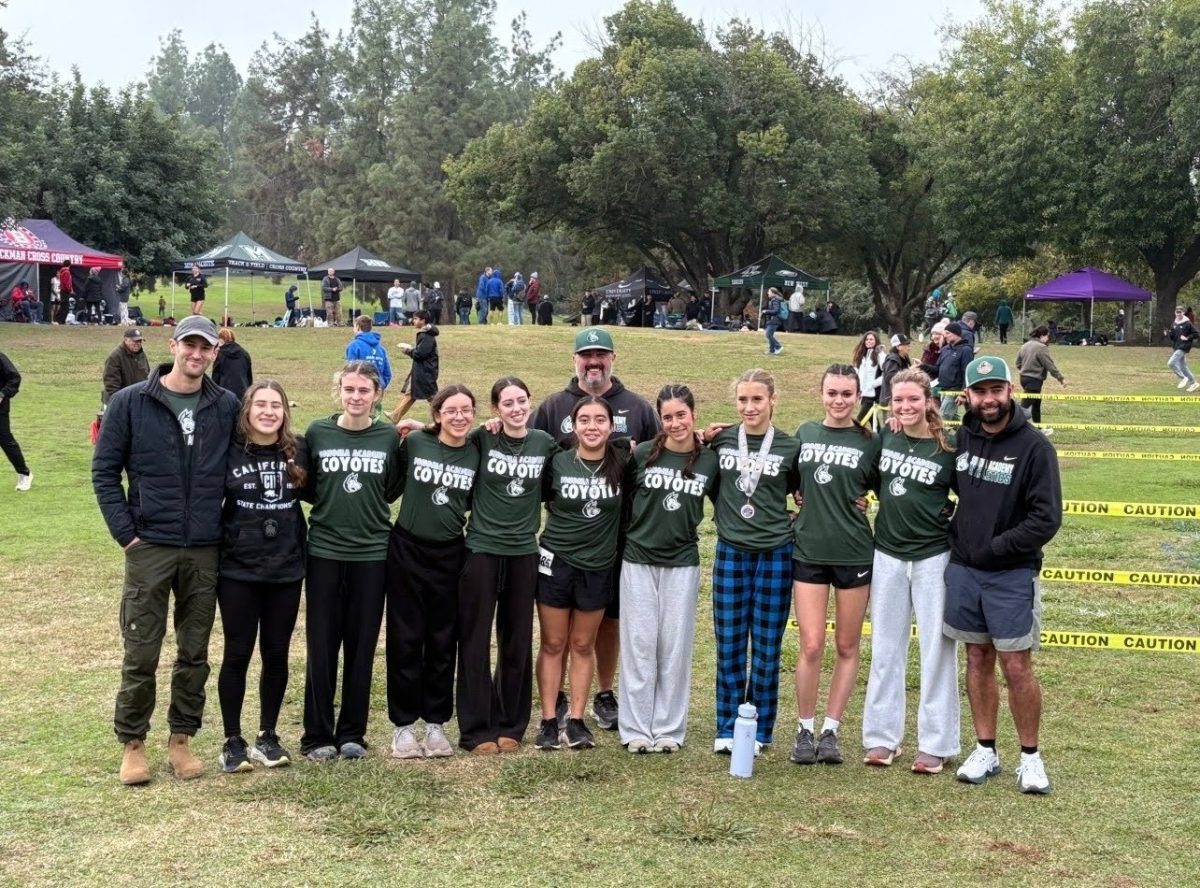
Josie Hill (‘27) is currently in the process of getting recruited for track. When asked what colleges wanted to see from her, Hill said, “They ask to see overall improvement season by season. They want to see that I have the range and stamina it takes to run longer distances, but they also want to see me run fast times for shorter distances to show I have the ability to progress in this sport.”
When asked how she is finding the process, Hill said, “It’s definitely been difficult to balance school, sports, and recruitment, but my accelerated sports class with Sally has really helped. My coach and mom have also been very helpful to me, along with trying to not compare my recruitment journey to another person’s.”
It’s common that students struggle with feeling overwhelmed and comparing themselves to others while applying to colleges. While it is important to manage your time and stay on top of things, what’s also key is listening to yourself and understanding that this is an incredibly individualized process. No two students’ application seasons will look the same.
Kohli advised students, “Be patient with yourself. Things can feel like they’re happening all at once, but it’s important to take the process part-by-part.”
Pavlak also said, “Don’t feel bad about yourself! You are going to encounter people who are terrifyingly impressive, but that doesn’t mean that you can’t get into a certain school.”
In the thick of the application process, students continue to strike a balance between work and rest. With support from the counseling department, friends and family, students learn not only how to apply to college, but also who they are. In the end, the application process becomes less about decisions and deadlines and more about discovering a sustainable, healthy way to move into the next chapter of their lives.





ben wrightsman • Nov 25, 2025 at 4:28 pm
love this <3f