










On my visit day, during the community meeting, a group of students presented pictures from their recent lobbying trip to Washington, D.C. This level of engagement was very attractive to me, coming from a middle school where almost no students had any regard for the planet.
I always intended to join the climate action group, Count Us, at Sonoma Academy, but as clubs and activities quickly piled up, I never got around to joining.
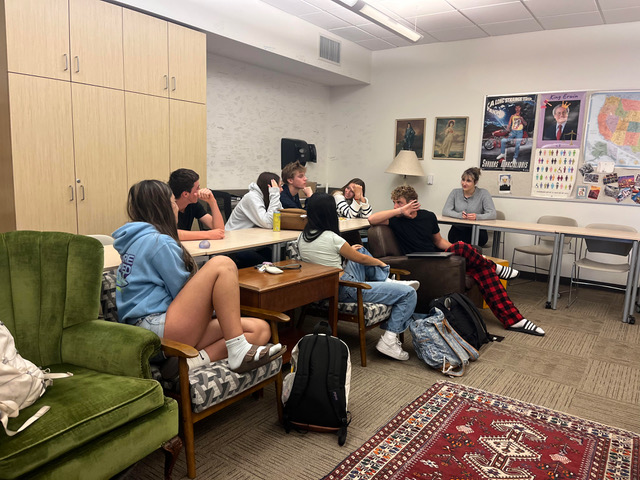
Earlier this month, I had some free time during lunch on a rainy Friday, and wandered down to David’s classroom on a whim. The current state of the club, a handful of students questioning the viability of legislative projects in the wake of our current political climate, was stark against the impression I had on my visit day.
The early post-pandemic years were the group’s heyday. In 2022, a Climate Emergency Resolution authored by then juniors Talulah Juniper (‘23) and Izzy Weaver (‘23) was passed, declaring a climate emergency in California. In the fall of 2023, a small group of SA students traveled to Washington, D.C. to introduce and lobby for two federal resolutions. Over 200 students from across the country collaborated on these resolutions. In the spring of 2023, SA students led the organizational charge to reintroduce those bills by researching, scheduling, emailing, making art and speaking with the press.

I realized that I had no idea what Count Us had been doing since their work in 2023. Students and teachers still care about the planet, so what happened to climate activism at Sonoma Academy?
As it turns out, Count Us is actually a relatively new club. Schools for Climate Action, a chapter of a national organization run by former SA Humanities Teacher Nancy Metzger-Carter, was the original club that lobbied in the capital three years ago. Metzger-Carter served as the mentor and advisor to the SA club, enabling them to achieve goals on a national scale.
When Metzger-Carter left SA, the Schools for Climate Action name and brand went with her. Overnight, the student climate activists at the heart of the campaign lost invaluable support. Current leader of Count Us Ben Wrightsman (‘26) said, “It’s a complicated issue. You know, we’re completely student-run, and we have big ambitions.”
The students who had been involved in the club for years graduated, and incoming freshmen were intimidated by the club’s impressive resume. Another leader, Ava Abate (‘27), said, “They didn’t really have much for us to do because everyone was already so invested in it, so it was kind of intimidating for us.”
In addition to dwindling attendance, the club struggled to find staff support. When Melissa Alfred joined SA as an interim Biology and Environmental Science teacher, filling in for Sierra LeBarge, she was also tasked with mentoring the club, but ultimately left the role. Even now, the Count Us staffulty advisor leads another club that often meets during the same time as Count Us.
Despite setbacks, the club continues to meet and create change. While fighting against the GAC’s plastic forks may not seem as flashy as fighting our country’s governing laws, Abate maintains that they are still essential. “I feel like the small things are just as important as the big things because even just making an effort to make a difference makes a difference. The small things are where we start.”
In addition to the small things, the group is also supporting the campaign for a climate law called the Make Polluters Pay Superfund Act. Wrightsman summarizes the bill written by Senator Caroline Menjivar as “hey, big oil and gas companies, through your ignorance and business decisions, you have caused the worst impacts of climate change on California. The bill aims to collect damage funds and then put them in what’s called a superfund.” In the spring of last year, the group traveled to Sacramento to campaign for the superfund. Abate says, “It was really cool. We got to meet with actual senators.”

Despite the challenges posed by the state of the country or fluctuating adult support, the Count Us club continues to show up and care about making a difference in our community and the world. Abate says, “It’s important because it’s literally our world that we live in.”